Need music gear? Get it at zZounds.com.

Casio Privia Pro PX-5S professional stage piano [NAMM13]

February 1, 2013

Alongside its new range of Celviano digital pianos, Casio has introduced the Privia Pro PX-5S professional stage piano.

The Privia Pro is a new category of Casio digital piano, targeted at professional stage pianists. Not only is it a digital piano but it can also serve as an advanced MIDI controller and performance workstation.

Casio’s new sound source AiR (Acoustic and Intelligent Resonation) is on board, delivering realistic, detailed acoustic piano sounds, as well as a range of authentic vintage electric piano and clavinet sounds. Additionally, the PX-5S features a large assortment of fully programmable sounds, including Hex Layer tones derived from the award winning XW-P1 synthesiser. Hex Layers can produce evocative synth sounds as well as complex acoustic and orchestral simulations.

Casio Privia Pro PX-5s

Weighing in at 24 pounds, the PX-5S can act as a four-zone controller, with four assignable knobs, six sliders, two pedal inputs, pitch and modulation wheels. Four independent and programmable arpeggiators allow the PX-5S to expand in to sonic territory by creating an array of animated textures. An eight track phrase sequencer allows the performer to trigger sequences and riffs which can be triggered and transposed and on the fly, allowing for unheard of performances by a single musician.

Performances can be recorded directly to a USB thumb drive as a 44.1kHz WAV file.

Specifications

Keyboard: 88-key, Tri-sensor Scaled Hammer Action II
Maximum Polyphony: 256 Notes
Number of Tones: 340 Preset / 220 User
Controllers: 4 knobs, 6 sliders, Pitch & Modwheel, 2 Pedal Inputs
Arpeggiator: 4 simultaneous programmable
Phrase Sequencer: 8 Tracks, up to 1,000 phrases
Storage: USB / File & Audio Recording
System Effects: Reverb, Chorus, Delay, String & Damper Resonance
Insert Effects: 4 simultaneous / Equalizer, Compressor, Limiter, Enhancer, Early Reflection, Phaser, Chorus, Flanger, Tremolo, Auto Pan, Rotary, Drive Rotary, LFO Wah, Auto Wah, Distortion (w/ Amp Simulator), Pitch Shifter, Multi Chorus, Ring Mod, Delay, Piano effect
Master Effects: 4 Band EQ & Compressor
MIDI: Independent USB & MIDI I/O
Audio Terminals: 1/4″ L&R Input & Output, 1/8″ Audio Input
Weight: 24 lbs

The Privia Pro PX-5S is available for a RRP of $1299.

Casio Celviano AP-250, AP-450, AP-650 digital pianos [NAMM13]

January 25, 2013

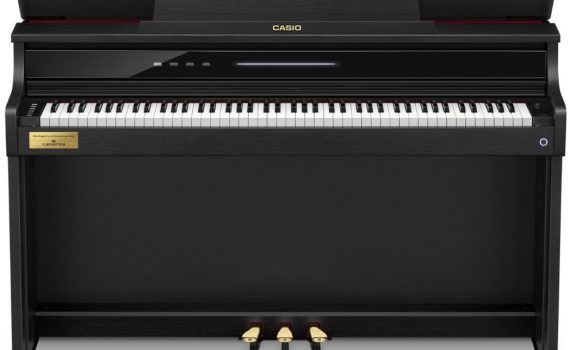
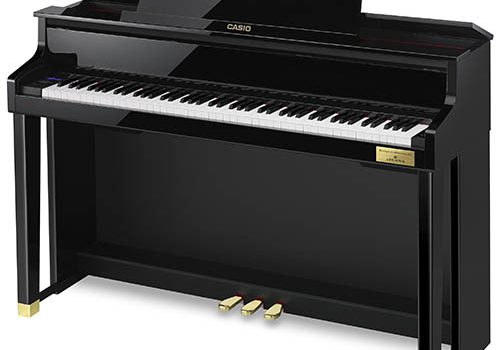
Casio has unveiled the latest three models in its Celviano series of digital pianos.

With over three times the waveform memory available in previous models, plus Casio’s Acoustic and Intelligent Resonator (AIR), the AP-250, AP-450 and AP-650 digital pianos are worth taking a look at.

Their cabinetry has been modernised and come complete with a piano bench, stand and three pedals. They feature 88 keys using Casio’s Tri-sensor Scaled Hammer Action system with simulated ebony and ivory textured keys.

The AP-450 and AP-650 can record 44.1kHz quality audio of a performance directly to a USB memory stick.

The AP-250, will be available in black or brown for an MSRP of $1399.99; the AP-450 will be available in black or brown for an MSRP of $1699.99; and the AP-650 will be available in black only for an MSRP of $1999.99.

Casio Celviano AP-250 Specifications

Casio Celviano AP-250BK

Casio Celviano AP-250BK

Keyboard: 88 keys, weighted scaled hammer action, Tri-Sensor keys:
Touch Response: 3 Sensitivity levels / Off
Sound Source: AiR (Acoustic & intelligent Resonator)
” Multi-dimensional Morphing AiR Sound Source ”
Acoustic Resonance: Yes
Polyphony (max): 128
Tones: 18
Reverb: 4 types
Chorus: 4 types
Brilliance: -3 ~ 0 ~ +3
Layer/Split: Yes
Registration Memory: -
Duet Mode: Yes
Preset Songs: 60
Metronome: Yes
Transpose: 25 steps (-12 semitones ~ 0 ~ +12 semitones)
Tuning Control: A4 = 415.5Hz ~ 440.0Hz ~ 465.9Hz
Recorder: 2 Tracks / 1 Song
USB Storage (to PC): Yes
Speakers: 4.7” x 2”
Amplifier: 8W + 8W
:
Terminals:
USB: Yes
Pedals: Built-in 3 pedals
Half-Damper pedal Operation
Headphone Hook: -
:
Accessories:
AC Adaptor: Yes
Pedals (Half-Damper pedal Operation): Yes
Bench: Yes
Music Stand: Yes
Score Book: Yes
:
Dimensions and Weight:
Unit size w/stand: 54.2″ x 17.0″ x 33.1″ (w/o score stand)
Unit weight w/stand: 87.1 lbs.
Boxed size: 58.7” (W) x 22.6” D) x 19.5” (H)
Boxed weight: 125.7 lbs.

Casio Celviano AP-450 Specifications

Casio Celviano AP-450BK

Casio Celviano AP-450BK

Keyboard: 88 keys, weighted scaled hammer action, Tri-Sensor keys, Ivory Touch
Touch Response: 3 Sensitivity levels / Off
Sound Source: AiR (Acoustic & intelligent Resonator)
” Multi-dimensional Morphing AiR Sound Source ”
Acoustic Resonance: Yes
Polyphony (max): 256
Tones: 18
Reverb: 4 types
Chorus: 4 types
Brilliance: -3 ~ 0 ~ +3
Layer/Split: Yes
Registration Memory: Yes
Duet Mode: Yes
Preset Songs: 60
Metronome: Yes
Transpose: 25 steps (-12 semitones ~ 0 ~ +12 semitones)
Tuning Control: A4 = 415.5Hz ~ 440.0Hz ~ 465.9Hz
Temperament:
Recorder: 2 Tracks / 1 Song
USB Storage (to PC): Yes
Speakers: 4.7″ x 2 / 2.0″ x 2
Amplifier: 20W + 20W
:
Terminals:
Line Out: Yes
USB: Yes
Pedals: Built-in 3 pedals
Headphone Hook: Yes
AC Adaptor: Yes
Pedals (Half-Damper pedal Operation): Yes
Bench: Yes (height adjustable)
Music Stand: Yes
Score Book: Yes
:
Dimensions and Weight:
Unit size w/stand: 54.2″ x 16.8″ x 33.1″ (w/o score stand):
Unit weight w/stand: 89.3 lbs.
Boxed size: 58.7″ x 22.6″ x 22.0″
Boxed weight: 137.8 lbs

Casio Celviano AP-650 Specifications

Casio Celviano AP-650MBK

Casio Celviano AP-650MBK

Keyboard: 88 keys, weighted scaled hammer action, Tri-Sensor keys, Ivory Touch
Touch Response: 3 Sensitivity levels / Off
Sound Source: AiR (Acoustic & intelligent Resonator)
” Multi-dimensional Morphing AiR Sound Source ”
Acoustic Resonance: Yes:
Polyphony (max): 256
Tones: 250
General MIDI Compatible: Yes
Rhythms/Auto-Accompaniment: 180
Reverb: 4 types
Chorus: 4 types
Brilliance: -3 ~ 0 ~ +3
Layer/Split: Yes
Registration Memory: Yes
Duet Mode: Yes
Preset Songs: 60
Metronome: Yes
Transpose: 25 steps (-12 semitones ~ 0 ~ +12 semitones)
Tuning Control: A4 = 415.5Hz ~ 440.0Hz ~ 465.9Hz
Temperament:
Recorder: 17 Tracks / 5 Songs
USB Storage (to PC): Yes
Display: LCD with backlight
Speakers: 6.3″ x 2 / 2.0″ x 2
Amplifier: 30W + 30W
:
Terminals:
Line Out: Yes
Line In: Yes
MIDI: Yes
USB: : Yes
Pedals: Built-in 3 pedals
Headphone Hook: Yes
:
Included Accessories:
AC Adaptor: Yes
Half-Damper pedal Operation: Yes (seamless recognition)
Bench: : Yes (height adjustable)
Music Stand: Yes
Score Book: Yes
:
Dimensions and Weight:
Unit size w/stand: 54.2″ x 16.8″ x 35.9″ (w/o score stand)
Unit weight w/stand: 110.7 lbs
Boxed size: 58.7″ x 22.6″ x 24.9″
Boxed weight: 164.2 lbs

More information is available at CasioMusicGear.com.

Roland RD-64 Digital Piano [NAMM13]

January 22, 2013

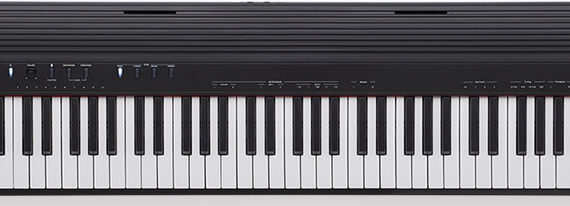
Roland introduces its latest compact, more easily transportable digital piano, the RD-64.

The ’64′ in the title refers to 64 keys — three more than the common five-octave (61 key) keyboards but featuring weighted Ivory Feel-G technology for a more authentic playing feel.

SuperNATURAL technology offers up a dozen realistic tones most often needed by the gigging keyboard player — acoustic pianos, electric pianos, organs and other keyboard instruments such as clavs.

rd-64_top_gal

The RD-64 also doubles as a versatile MIDI controller keyboard, and is designed to come into its own when paired with one of Roland’s modules or synths such as the INTEGRA-7, JUPITER 50 or JUPITER 80.

At a glance features:

  • Grand piano sound and weighted keyboard action in a compact, mobile instrument
  • SuperNATURAL Piano sound engine delivers authentic, expressive acoustic piano sounds
  • E. Piano based on SuperNATURAL technology provides vintage electric pianos modeled with extraordinary accuracy
  • 12 versatile tones onboard, including clav and organ sounds
  • 64-note Ivory Feel-G Keyboard with Escapement for a pro-quality piano touch
  • Streamlined design that’s light and easy to carry
  • Two-band EQ and reverb, plus two multi-effects (EFX 1, EFX 2) for each tone category
  • Controller mode* provides MIDI master keyboard functionality, including a dedicated, one-touch setup for controlling SuperNATURAL tones in the INTEGRA-7 sound module and JUPITER-80/-50 synthesizers
  • Pitch bend/mod lever and D-BEAM
  • iPad compatibility via Apple’s iPad Camera Connection Kit

Being demonstrated at this year’s NAMM show, full specifications, pricing and availability will be announced in due course.

Yamaha intros ARIUS YDP-C71PE digital piano [NAMM12]

January 22, 2012

Yamaha adds to its ARIUS line of digital pianos — which already include the YDP-S31, YDP-181 and YDP-V240 — with the YDP-C71PE.

Featuring a Graded Hammer (GH) 88-key keyboard and 3-level Advanced Wave Memory (AWM) dynamic stereo sampling system, it comes with a luxurious polished ebony finish and offers a much improved acoustic system designed to give a cleaner sound with more presence.

128 notes of polyphony should be enough for the most demanding musical passages, while two track recording is great for capturing performances and improving technique.

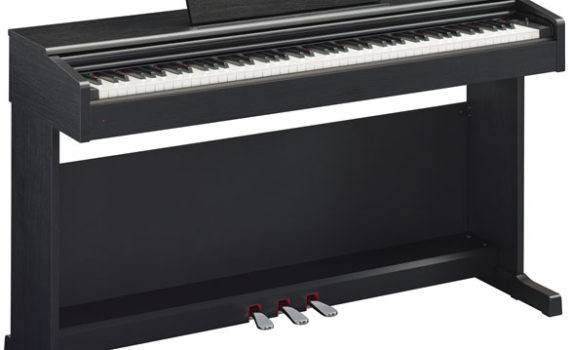
Yamaha ARIUS YDP-C71PE digital piano

Yamaha ARIUS YDP-C71PE digital piano

Specifications

Here’s the full specification sheet:

Size/Weight

DimensionsWidth1,388mm (54-5/8")
Height822mm (32-3/8")
Depth424mm (16-11/16")
WeightWeight44kg (97 lbs.)

Control Interface

KeyboardNumber of Keys88
TypeGraded Hammer (GH) Keyboard
Touch SensitivityHard/Medium/Soft/Fixed
PedalNumber of Pedals3
Half PedalYes
FunctionsDamper, Sostenuto, Soft
PanelLanguageEnglish

Cabinet

Key CoverKey Cover StyleSliding
Music RestYes

Voices

Tone GenerationTone Generating TechnologyAWM Dynamic Stereo Sampling
Number of Dynamic Levels3
PolyphonyNumber of Polyphony (Max.)128
PresetNumber of Voices10

Effects

TypesReverbYes
FunctionsDual/LayersYes

Songs

PresetNumber of Preset Songs10 Demo Songs, 50 Piano Prest Songs
RecordingNumber of Songs1
Number of Tracks2
Data Capacity100KB (ca. 11,000 notes) for User Song
Recording FunctionYes
Compatible Data FormatPlaybackSMF
RecordingSMF

Functions

Overall ControlsMetronomeYes
Tempo Range32-280
Transpose-6 to 0, 0 to +6
TuningYes

Storage and Connectivity

StorageInternal Memory845KB
ConnectivityHeadphonesx 2
MIDIIn/Out

Amplifiers and Speakers

Amplifiers20W x 2
SpeakersOval (12cm x 6cm) x 2

Power Supply

Power SupplyAC Inlet

Accessories

Included AccessoriesHeadphones HangerYes
Song Book"50 greats for the Piano"

Exact pricing and availability to be confirmed.

Roland intros RP301 and RP301R digital pianos [NAMM12]

January 22, 2012

Roland has introduced the RP301 and RP301R digital pianos, both featuring its SuperNATURAL sound technology, Ivory Feel-G keyboard and a number of features designed to make piano playing more fun and rewarding.

We don’t have the detailed specifications for each model, but it seems that the RP301R additionally features 60 built-in accompaniments and an intelligent chord recognition system, making it more suited to those who want that bit extra than most digital pianos offer.

Key features of the RP301 are:

  • SuperNATURAL Piano recreating authentic piano expressiveness
  • Ivory Feel-G keyboard for true piano feel and touch
  • Easy access to features for practice and performance with dedicated front-panel buttons
  • Metronome, recorder, and Twin Piano features convenient for skill building
  • Environment friendly; low power consumption and Auto Off function
  • Two beautiful cabinet finishes: Satin Black and Simulated Rosewood

And of the RP301R:

  • 60 built-in rhythm accompaniments enrich your piano performance
  • Newly developed full-keyboard chord recognition engine
  • Three versatile playing modes: Pianist, Split Chord, and Split Tone
  • Perfect sound through SuperNATURAL piano technology
  • Authentic piano touch and feel with Ivory Feel-G keyboard
  • Rhythm accompaniment can be expanded through USB memory
  • Built-in LCD enhances the user-friendly operation
  • Environment-concious design with Auto Off function and low power consumption (12 W* under the condition of average use without compromising its powerful sound)

Of particular interest to those who like auto-accompaniment features is the intelligent full-keyboard chord recognition system. Roland claims this means the pianist doesn’t need to change their playing style in order for the accompaniment system to recognise and adapt to the chords being played.

This is in contrast to the systems traditionally found on other keyboards whereby the player is forced to play chords in the lower octave or two of the keyboard with the left hand, or even to play various note combinations which denote major, minor and other chords.

Those systems work well if you get used to them, but not so well for trained pianists who are used to playing chords with the right hand, or split between left and right hand, often in differing inversions. It will be interesting to hear how well Roland’s technology copes with the many variations in chord style (including broken chords/arpeggios perhaps?)

Here’s more information about the different features found on the RP301 or RP301R.

60 Built-In Rhythm Accompaniments for Piano Performance

The RP301R incorporates 60 built-in rhythm accompaniments spanning 11 music genres, which are designed to enrich your musical repertoire and enjoyment. Each rhythm accompaniment contains an Intro, Ending, Variation, and Fill patterns that includes a basic rhythm part (drums/percussion) and melodic accompaniments, such as bass, guitar, and strings. Rhythm accompaniment can be expanded through USB memory.

Intelligent Full-Keyboard Chord Recognition (Pianist Mode)

Make incredible music with the RP301R’s newly developed full-keyboard chord- recognition engine, which reacts to the pressing level of the damper pedal. Any chord you play can be recognized in real time, allowing the auto-accompaniment to follow what you play. You can play along with sophisticated rhythm accompaniments without changing your piano playing style.

SuperNATURAL Piano

The RP301/RP301R incorporates Roland’s SuperNATURAL Piano engine — a cutting-edge technology derived from the flagship V-Piano as well as 88-key stereo multisampling. SuperNATURAL Piano brings a new level of authentic sound and natural performance to the digital domain. Roland’s engineers relentlessly analyzed the complex, ever-changing characteristics of concert grand pianos, faithfully capturing and reproducing the tonal variations based on the velocity of each keystroke. With SuperNATURAL, three key elements are dramatically enhanced: velocity response, note decay and key-range behavior. The end result is an incredibly expressive and authentic sound that blurs the line between digital and acoustic.

Ivory Feel-G Keyboard

Featuring Roland’s acclaimed Progressive Hammer Action design with Escapement, the RP301/RP301R’s Ivory Feel-G keyboard inherits the functions, appearance, and texture of keyboards found on our flagship pianos. Thanks to a combination of advanced sensor technologies and our SuperNATURAL Piano sound engine, the RP301/RP301R offers expression and performance that rivals high-end pianos.

Practice and Performance

The RP301/RP301R is equipped with friendly features to enhance your skills. The Twin-Piano feature, for example, is designed for side-by-side lessons or performances with a teacher or duet partner. It enables the keyboard to be split into two parts, each of which covers the same octaves. This makes it easy to see and hear when practicing beside a teacher. In the same way, the left and right pedals can be reassigned to act as damper pedals for either side of the split keyboard. The RP301/RP301R also has built-in metronomes and recorders, so you can practice with a perfect time reference, and record and listen back to your performances. The built-in song library includes a selection of classical piano etudes — great for practice sessions.

Digital Advantage

With the RP301/RP301R, you can play day or night, year after year, and enjoy perfect sound and performance. Since the instrument is fully digital, there are no strings to tune, and no need to worry about temperature changes or aging strings. Furthermore, the RP301 gives you the choice of playing through its built-in speakers, its external output, and/or through headphones so you can practice privately day or night without disturbing your neighbors. The built-in external input lets you connect an audio player for play-along fun.

Roland intros F-120 digital piano [NAMM12]

January 22, 2012

Building on the successful F-110, Roland introduces its F-120 digital pianos, which it says are ideal for pianists wanting authentic sound and touch in a compact, contemporary cabinet.

Key features include:

  • SuperNATURAL Piano engine onboard
  • Ivory Feel-G keyboard for true piano feel and touch
  • Compact, lightweight and stylish cabinet
  • Dedicated front-panel buttons for piano practice, lessons, and performance
  • Metronome, recorder, and Twin Piano features for lessons or side-by-side performance
  • Environment friendly; low power consumption and Auto Off function
  • Two classy finishes: Satin Black and White

Read more about the features below:

SuperNATURAL Piano

With Roland’s breakthrough SuperNATURAL Piano engine at its core, the F-120 brings a new level of authentic sound and natural performance to the digital domain. Roland’s engineers relentlessly analyzed the complex, ever-changing characteristics of concert grand pianos, faithfully capturing and reproducing the tonal variations based on the velocity of each keystroke. With SuperNATURAL, three key elements are dramatically enhanced: velocity response, note decay and key-range behavior. The end result is an incredibly expressive and authentic sound that blurs the line between digital and acoustic.

Ivory Feel-G Keyboard

The F-120 is outfitted with an Ivory Feel-G keyboard, featuring Progressive Hammer Action with Escapement, inherits the functions, appearance, and texture of keyboards found on Roland’s flagship pianos. Thanks to the combination of the latest sensor technologies and the SuperNATURAL Piano sound engine, the F-120 offers expression and performance that rivals that of high-end pianos.

Slim Cabinet Design

Compact, stylish and only 30cm deep, the F-120 can be placed anywhere in your room. The unique folding-lid design covers the keyboard safely when closed, and serves as a music rest when raised. The F120 is available in two beautiful finishes: Satin Black and White.

Skill-Building Features

More than a great piano, the F-120 is equipped with features to enhance your skills. The Twin-Piano feature, for example, is designed for side-by-side lessons or performances with a teacher or duet partner. It enables the keyboard to be split into two parts, each of which covers the same octaves. This makes it easy to see and hear when practicing beside a teacher. In the same way, the left and right pedals can be reassigned to act as damper pedals for either side of the split keyboard. The F-120 also has a built-in metronome and recorder, so you can practice with a perfect time reference, and record and listen back to your performances.

Digital Advantage

With the F-120, you can play day or night, year after year, and enjoy perfect sound and performance. Since the instrument is fully digital, there are no strings to tune. No need to worry about temperature changes or aging strings. And since it’s digital, the F-120 lets you play through its built-in speakers, its external output, or privately through headphones. The built-in external input lets you connect an audio player for play-along fun.

Pricing and availability to be confirmed.

Roland intros HP500 Series of digital pianos [NAMM12]

January 21, 2012

Hot on the heels of Roland’s LX-15 announcement come three upright digital pianos in the new HP500 series.

By now you’ll be fairly familiar with Roland’s SuperNATURAL sound technology. It’s appeared in many of Roland’s newer digital pianos including all in the HP300 series (the HP302, HP305 and HP307) as well as the HPi-6F and HPi-7F.


In the HP500 series, the HP503 seems to be the more entry level model. It features an Ivory Feel-S keyboard with escapement, while the HP505 and HP507 feature Roland’s PHA III (Progressive Hammer Action III) ivory feel keyboard. All three keyboards feature keys with moisture absorption properties, making them feel much more like authentic ivory and ebony.

Other features include:

  • Natural, organic multi-dimensional sound field of an acoustic piano produced by Acoustic Projection technology (HP505/507)
  • SuperNATURAL Piano sound engine with seamless tonal changes according to touch, plus beautiful decay and faithful reproduction of the differences in tone between each key
  • PHA III (Progressive Hammer Action III) Ivory Feel Keyboard with Escapement (HP505/507) and Progressive Damper Action Pedal
  • Play classical piano masterpieces using the authentic sounds (such as true fortepiano) they were written for
  • Elegant and bold design; HP500-series pianos are perfect for traditional or contemporary interiors
  • Onboard LCD offers user-friendly operation with straightforward front-panel layout
  • Energy-saving technology achieves powerful and dynamic sound with lower power consumption

Although we don’t have the detailed specifications yet, we expect to see at least 128 note polyphony (possibly 256 on the higher models).

Read more on the features below:

Innovative Acoustic Projection Sound System

The unique sound space that is created when you play an acoustic piano — the resonance between strings and the resonance from the piano’s frame or body — is realized through a complex and yet harmonious combination of elements. The HP507 and HP505 create this realistic sound space through innovative Acoustic Projection technology, which marries the multi-dimensional sound system found in the flagship V-Piano Grand with our SuperNATURAL Piano sound engine. Acoustic Projection delivers its magic though a multi-channel speaker system, with each speaker located properly to project each sound element in its natural position. The sound elements from each speaker are intelligently blended to reproduce the true soundfield of an acoustic piano.

SuperNATURAL Piano Engine

All three of the new HP-series pianos incorporate Roland’s SuperNATURAL Piano technology for seamless velocity response, natural note decay, and authentic key-range behavior to reproduce perfect piano sound and expression. Tone color changes seamless in response to touch, accurately translating the player’s emotions. Tone decay is natural and organic, with the decaying sound not only decreasing in volume, but also gradually changing in color to a softer tone. Each note has its own character, which creates variations in tonal color and resonance of each note.

Authentic Fortepiano Tones Onboard

In addition to the selection of onboard grand-piano sounds, the new HP500 series features a newly added Early Piano category containing four fortepiano variations and two harpsichord variations. Masterpieces composed by maestros such as Mozart, Beethoven, and Chopin can be played with the original sounds from the period. The appreciation and understanding for the piece is heightened when using the instrument that was actually used by the composers. You can also play these early piano sounds with built-in historic temperaments which are ideal to play with other classical instruments.

Real-Feel Keyboards

The HP507 and HP505 are equipped with Roland’s flagship PHA III (Progressive Hammer Action III) Ivory Feel keyboard with Escapement. The HP503 contains an Ivory Feel-S keyboard with Escapement. With fast key-repetition and sensitivity, these keyboard faithfully translates into sound the subtle differences in tones from different playing styles and force at which they are played. The keys are finished with material that provides moisture-absorbing properties, resulting in a keyboard with the natural texture and tactile sensation of real ivory and ebony.

Progressive Damper Action Pedal

The HP500 series is equipped with “Progressive Damper Action Pedals” that have light resistance at the beginning of the stroke and more resistance the instant they begin to take effect, just like real acoustic pianos. This makes it easy for the performer to know when the pedals begin take effect, and also allows half-pedal techniques for subtle control of aftertones and resonance. This pedal can accurately convey the techniques of the most demanding pianists.

Built-In Audio/MIDI Recorder with Flexible Control (HP507/505)

The built-in recorder lets you capture your performances as audio and/or MIDI data — a convenient feature for pianists as well as students who want to evaluate their playing (HP507/505/503). Connect an external digital music player to the input jacks, play a song file, and the HP507 and 505 can transpose it in real time. You can even minimize the melody of an audio song using Center Cancel function. Play along and capture your performance as audio data. Recorded audio data can be saved onto USB Memory, and copied to an external computer for making audio CDs or for uploading to the Internet.

* USB memory is required for audio recording.

** The HP503 captures your performance as well as play backed SMF data as audio data.

Ease of Use

The simple and intuitive control panels afford quick and easy access to the HP500 series’ numerous features and applications. LCD panels provide the ideal visual interface with the instrument.

Environment-Conscious Design

All HP500-series pianos achieve low power consumption while still delivering high-impact performance. They also feature an Auto Off function, which, when activated, automatically switches the power off after a specified period of inactivity; inactivity time is selectable from 10 minutes, 30 minutes (default), 240 minutes, and off.

Exact pricing and availability is still to be confirmed.


Roland intros LX-15 upright digital piano [NAMM12]

January 20, 2012

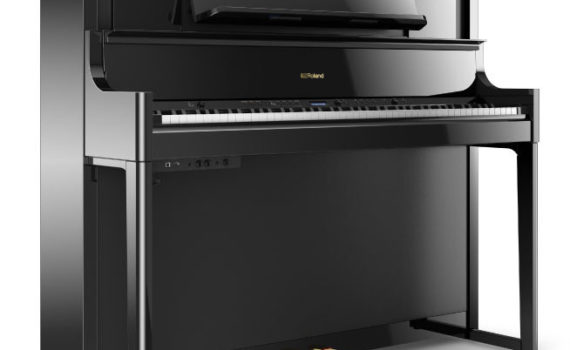
Roland has introduced its LX-15 digital piano, building on the technology found in the LX-10 and LX-10F.

Featuring the SuperNATURAL sound engine with Soundboard Behaviour system, it offers organic sound and expressive potential.


The Acoustic Projection system delivers a natural, multi-dimensional sound, with a range of new and expanded keyboard instrument sounds to choose from including modern grand pianos, fortepianos and harpsichords.

The keyboard has been upgraded to the PHA III (Progressive Hammer Action) system for enhanced playing feel, including escapement. There’s also a progressive damper pedal, making the whole experience much closer to that of an acoustic upright piano.

Added to this there’s USB audio recording capability and a stylish, classical cabinet design so it will look great wherever it’s placed.

You can read more about the individual features below.

Innovative Acoustic Projection Sound System

The LX-15’s newly developed Acoustic Projection sound system creates a multi-dimensional sound field with accurate piano-resonance characteristics. The technology is derived from Roland’s acclaimed V-Piano Grand sound system. Six speakers are used for this system: The upper speakers provide ambience or various resonance portions; the middle speakers, located near the keyboard, enhance the image of the direct piano sound; the lower speakers recreate the piano body sound for rich bass and energy. The blend of those speakers creates a unique, deep sound field that dramatically enhances the expressiveness of the SuperNATURAL Piano.

SuperNATURAL Piano with Soundboard Behavior

The LX-15 incorporates Roland’s SuperNATURAL Piano technology for seamless velocity response, natural note decay, and authentic key-range behavior to reproduce perfect piano sound and expression. Newly developed Soundboard Behavior technology emulates the natural characteristics of string vibrations on the soundboard, and is not found on conventional sampling pianos. The technology is based on the V-Piano’s soundboard modeling, and can enhance sound clarity even when many notes are played simultaneously.

Expanded Piano Selection

The built-in piano selection has been expanded in the LX-15. In addition to modern grand-piano sounds, a newly added Early Piano category contains four fortepiano variations and two harpsichord variations. Enjoy a treasured lineup of instruments new and old, spanning centuries.

Polished-Ebony Finished Cabinet

The LX-15’s polished-ebony finish gorgeous design cabinet features a contoured design for a strong, bold look with classical elegance. The graceful design fits well into any home environment, from classic to contemporary interiors. The mirror-finished fallboard reflects the keyboard and moving fingers, bringing a sense of visual enjoyment to your playing. The top lid can be closed and opened smoothly to shape the piano’s overall tonal character.

PHA III Ivory Feel Keyboard with Escapement

Roland’s high-end PHA III keyboard accurately responds to the players touch, from the most subtle and delicate to the most dynamic technique. The escapement mechanism reproduces the authentic click-feel of a grand-piano keyboard. The keyboard also features Roland’s acclaimed Ivory Feel surface material, which replicates the texture of ivory and ebony.

Progressive Damper Action Pedal

The LX-15’s Progressive Damper Action pedal accurately reproduces the pedal response of an acoustic piano. When you first start to press the damper pedal, it offers lighter resistance, but as you continue to press, the resistance increases, just as on an acoustic piano. The damper pedal can also accurately express the unique sound decay when half-pedaling.

Built-In Audio/MIDI Recorder

The LX-15’s built-in recorder lets you capture your performances as audio and/or MIDI data — a convenient feature for pianists, as well as students who want to evaluate their playing afterward. Recorded audio data can be saved onto USB Memory*, and copied to an external computer for making audio CDs or for uploading to the Internet.

* USB memory is required for audio recording.

Exact pricing and availability is still to be confirmed. Be sure to also check out the new HP500 series of digital pianos.


Yamaha P95 Digital Piano – An Unbiased Review

January 1, 2012

By Roger Svenson

This article gives you a short, unbiased review of the Yamaha P95 digital piano and is based on what actual users say. You will find out what people think of the piano so that you can decide for yourself if it’s worth the investment.

To begin with, it is important to understand that if you want an objective review of this (or any other) digital piano, your best bet is to read reviews by third parties, such as actual users.

The manufacturers of the piano (in this case Yamaha) will of course present their product in the most favourable light. They have a product to sell. But actual users, on the other hand, have no agenda or ulterior motive. They simply give their honest feedback.

And what do users say about the Yamaha P95? You can choose to read hundreds of reviews, but this article summarizes the main points and gives you what might be called the “general consensus”.

  1. Most users appreciate the authentic feel or “action” of the keyboard – the “weighted action” keyboard means that you experience the same resistance from the keys as you would on an acoustic piano. The keys are heavier on the lower end and become progressively lighter as you move up the keyboard. The vast majority of users love this feature and point out that Yamaha P95 feels very much “like a real piano.”
  2. Most users also appreciate the piano sound of the Yamaha P95. Every digital piano aims to replicate the sound of an acoustic piano. According to a very large number of P95 users, the Yamaha P95 achieves this goal very nicely. Even highly-experienced musicians comment on the resemblance in sound to an acoustic piano.
  3. Some users point out that the Yamaha P95 has fewer voices and sounds than other digital pianos. The Yamaha P95 has 10 preset voices, which is admittedly not as many as some other digital pianos on the market. If you are looking for a piano with a huge selection of different voices, you will probably be more attracted to other digital pianos. However, if you are primarily interested in the acoustic piano sounds and do not require all the “bells and whistles” that come with more expensive digital pianos, the chances are that you’ll be more than satisfied by the Yamaha P95
  4. Another pleasing feature of the Yamaha P95 is its portabilityIt weights just 26 lbs (or 12kg) and is certainly the sort of instrument that you can move around, take to gigs and so on. Nor does this mean that you’re getting a “lesser” piano. The Yamaha P95 has a full keyboard with 88 weighted keys, which makes its portability even more impressive.
  5. If you live in small apartment or just don’t have room for a large instrument, then the Yamaha P95 is ideal. Its dimensions are such that you’ll be able to find a place for it even if you have limited space in your home. This is of course one of the main reasons why people purchase digital pianos over acoustic uprights or grands.

Hopefully this brief review has given you a better idea of the Yamaha P95. This digital piano receives extremely high ratings from customers on all the major online stores (4.5 stars out of 5 on Amazon, for instance) and is likely to satisfy your needs extremely well if you are looking for a portable piano with authentic sound and feel.

Though there are other digital pianos available with more voices, few can compare with the Yamaha P95 in terms of calibre and popularity. In addition, at just over $500 (online) the P95 is highly affordable, particularly when you consider that a “real” acoustic piano costs about ten times the price.

The Yamaha P95 is not a perfect piano (if such a piano even exists) but if you are like the vast majority of users you will find that it provides an extremely satisfying alternative to its more expensive acoustic counterparts.

Roger Svenson is a music enthusiast and is interested in digital pianos such as the Yamaha P95 and other top models.

Click here for a great deal on the Yamaha P95 digital piano.

Article Source: http://EzineArticles.com/?expert=Roger_Svensonhttp://EzineArticles.com/?Yamaha-P95-Digital-Piano—An-Unbiased-Review&id=6800679

Josh Charles releases “Life Ain’t Fair” using Casio Privia PX-3

October 7, 2011

Josh Charles, Casio’s Privia spokesperson, has announced his new single “Life Ain’t Fair”, co-written with Milton L. Brown.

Written using a Privia PX-3 digital piano Charles says, “‘Life Ain’t Fair’ is a song that speaks for what is happening to the socio-economic state of our country, and yet for as dark as days get, there’s always a light at the end of the tunnel. You keep keepin’ on because that’s the only way to go.”

The track was recorded in Nashville, Tennessee at Omni Studios with Marty Stuart and His Fabulous Superlatives’ guitarist, Kenny Vaughan, with Harry Stinson on drums and background vocals, and bass player Paul Martin, Mike Noble — and Al Perkins on pedal steel guitar, who has recorded and toured with the Rolling Stones, Bob Dylan and Randy Newman. Violin was added by Fats Kaplin, and the track was mixed by T.W. Cargile (Jamey Johnson). “Life Ain’t Fair” has just been released by Down Home Records / Interscope Digital Distribution.

“Josh Charles is one of the best musicians in the world, and we’re proud that he is using Privia digital pianos,” said Mike Martin, general manager of marketing, Electronic Musical Instruments Division for Casio America, Inc.

Next Page »