Circuit bending Yamaha PSS-30

February 21, 2012

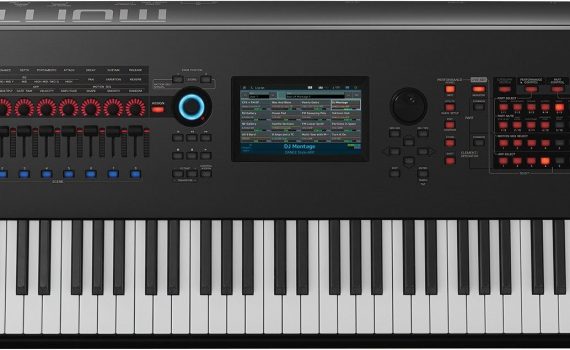
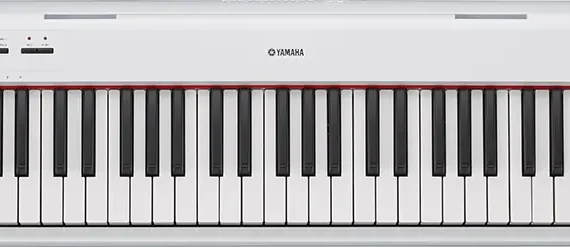
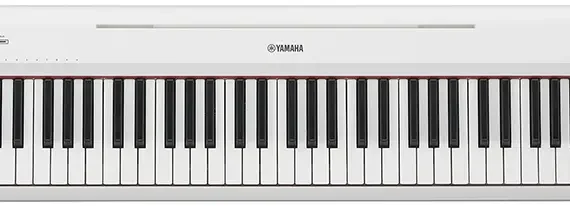
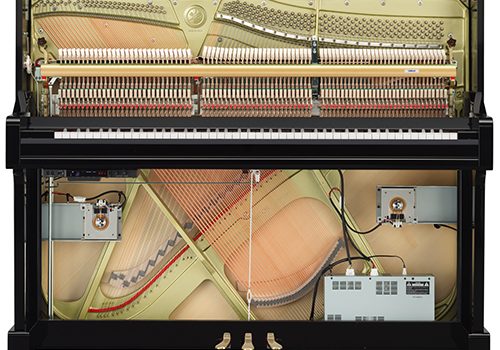
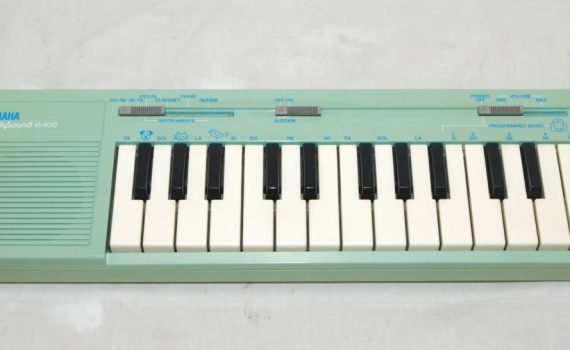
Check out the latest blog post over at noystoise. It details the process of circuit bending a Yamaha PSS-30 (which by all accounts is notoriously difficult to do) and building a pretty incredible piece of kit.

Yamaha PSS-30 circuit bent

Yamaha PSS-30 circuit bent

Read about the whole experience (frustrations and all) from start to finish then check out the cool 12-minute video demo of the finished synth.

Yamaha intros EZ-220 lighted keyboard [NAMM12]

January 22, 2012

Yamaha has updated its EZ-200 lighted keyboard with the introduction of the EZ-220.

Information is pretty sparse at present, with no spec sheet and a minimal description.

What we’ve managed to glean is that it will include 100 preset songs designed to help beginners learn to play the keyboard.

Yamaha EZ-220 Lighted Keyboard

Yamaha EZ-220 Lighted Keyboard

It features 392 built-in voices including realistic acoustic instruments including drums, plus synths and sound effects. There are 100 preset accompaniment styles on board.

Finally, the Yamaha Education Suite offers various lessons and tutorials for the budding pianist.

Exact pricing and availability are still to be confirmed.

Yamaha intros Disklavier E3 Series DGB1KE3Classic [NAMM12]

January 22, 2012

Yamaha has extended its range of Disklavier E3 digital pianos with the DGB1KE3Classic.

While it’s zero marks for the appalling product name, we should look beyond to the specs themselves.

Yamaha has developed a new “Damper Drive System” which makes the E3 Classic more affordable. Yamaha states that, “During playback, direct driving of the dampers provides the same damper effect as the conventional Disklavier,” whilst, “during recording, the damper pedal sensing system records your pedalling precisely.”

Yamaha Disklavier E3 Classic DGB1KE3Classic

Yamaha Disklavier E3 Classic DGB1KE3Classic

The E3 Classic comes with a CD containing over 400 songs so it’s ready to listen to as soon as it arrives.

The built-in amplification system creates a spacious sound that’s ideal for the acoustic sounds the instrument is recreating.

It’s easy to record on the Disklavier and it has enough built-in storage for hundreds of hours of music. It’s even possible to record a MIDI file synchronised perfectly to an audio CD or file on USB memory stick, such as a track from a favourite band.

Full specifications:

Specs

Color/Finish

CabinetColorPolished Ebony
FinishPolished

Size/Weight

DimensionsWidth146cm (57")
Height99cm (39")
Depth151cm (5" or 60")
WeightWeight284kg (627lbs)

Control Interface

KeyboardNumber of Keys88
Key Surfaces – WhiteAcrylic resin
Key Surfaces – BlackPhenolic resin
Sensor/DriverKey SensorsNon-contact optical fiber/grayscale shutter sensing system for 88 keys(senses the key position, key velocity, and key release velocity)
Pedal SensorsDamper pedal: Non-contact optical position-sensing system
Key DriversDSP servo drive system (servo-controlled solenoids)
Pedal Drivers-

Cabinet

LidProp Positions3
Prop Safety StopYes
Key CoverLid/Fallboard LocksYes
Soft-Close FallboardYes

Voices

Tone GenerationTone Generating TechnologyAdvanced Wave Memory 2 (AWM2)
PolyphonyNumber of Polyphony (Max.)32
PresetFeatured VoicesNormal Voices: 676 Drum Voices: 21 kits total

Functions

Overall ControlsTuningSet at A=440, tunable ±50 cents in 1-cent increments

Storage and Connectivity

Storage MediaInternal Memory128 MB
CDAudio CD (ISO 9600-compliant), Data CD (ISO 9600-Level1-compliant)
USB Flash MemoryYamaha does not assure the operation of the commercially available USB flash memories. For a list of compatible products, please visit: www.yamaha.com/disklavier
USB Hard DiskFAT32 format (Yamaha does not assure the operation of the commercially available USB hard disks)
Floppy Disk Drive3.5" 2DD (720 KB) or 2HD (1.44 MB) floppy disk (Optional)

Power Supply

Power RequirementsLocal AC current, 120V, 60Hz

Accessories

Included AccessoriesOthersControl Unit (1), control unit suspension bracket (1), monitor speaker (1), monitor speaker installation kit (1), speaker cord (1), remote control (1), battery for remote control (2), sample Pianosoft CD software (2), operation manual (1)

Exact pricing and availability to be confirmed.

Yamaha intros ARIUS YDP-C71PE digital piano [NAMM12]

January 22, 2012

Yamaha adds to its ARIUS line of digital pianos — which already include the YDP-S31, YDP-181 and YDP-V240 — with the YDP-C71PE.

Featuring a Graded Hammer (GH) 88-key keyboard and 3-level Advanced Wave Memory (AWM) dynamic stereo sampling system, it comes with a luxurious polished ebony finish and offers a much improved acoustic system designed to give a cleaner sound with more presence.

128 notes of polyphony should be enough for the most demanding musical passages, while two track recording is great for capturing performances and improving technique.

Yamaha ARIUS YDP-C71PE digital piano

Yamaha ARIUS YDP-C71PE digital piano

Specifications

Here’s the full specification sheet:

Size/Weight

DimensionsWidth1,388mm (54-5/8")
Height822mm (32-3/8")
Depth424mm (16-11/16")
WeightWeight44kg (97 lbs.)

Control Interface

KeyboardNumber of Keys88
TypeGraded Hammer (GH) Keyboard
Touch SensitivityHard/Medium/Soft/Fixed
PedalNumber of Pedals3
Half PedalYes
FunctionsDamper, Sostenuto, Soft
PanelLanguageEnglish

Cabinet

Key CoverKey Cover StyleSliding
Music RestYes

Voices

Tone GenerationTone Generating TechnologyAWM Dynamic Stereo Sampling
Number of Dynamic Levels3
PolyphonyNumber of Polyphony (Max.)128
PresetNumber of Voices10

Effects

TypesReverbYes
FunctionsDual/LayersYes

Songs

PresetNumber of Preset Songs10 Demo Songs, 50 Piano Prest Songs
RecordingNumber of Songs1
Number of Tracks2
Data Capacity100KB (ca. 11,000 notes) for User Song
Recording FunctionYes
Compatible Data FormatPlaybackSMF
RecordingSMF

Functions

Overall ControlsMetronomeYes
Tempo Range32-280
Transpose-6 to 0, 0 to +6
TuningYes

Storage and Connectivity

StorageInternal Memory845KB
ConnectivityHeadphonesx 2
MIDIIn/Out

Amplifiers and Speakers

Amplifiers20W x 2
SpeakersOval (12cm x 6cm) x 2

Power Supply

Power SupplyAC Inlet

Accessories

Included AccessoriesHeadphones HangerYes
Song Book"50 greats for the Piano"

Exact pricing and availability to be confirmed.

Yamaha P95 Digital Piano – An Unbiased Review

January 1, 2012

By Roger Svenson

This article gives you a short, unbiased review of the Yamaha P95 digital piano and is based on what actual users say. You will find out what people think of the piano so that you can decide for yourself if it’s worth the investment.

To begin with, it is important to understand that if you want an objective review of this (or any other) digital piano, your best bet is to read reviews by third parties, such as actual users.

The manufacturers of the piano (in this case Yamaha) will of course present their product in the most favourable light. They have a product to sell. But actual users, on the other hand, have no agenda or ulterior motive. They simply give their honest feedback.

And what do users say about the Yamaha P95? You can choose to read hundreds of reviews, but this article summarizes the main points and gives you what might be called the “general consensus”.

  1. Most users appreciate the authentic feel or “action” of the keyboard – the “weighted action” keyboard means that you experience the same resistance from the keys as you would on an acoustic piano. The keys are heavier on the lower end and become progressively lighter as you move up the keyboard. The vast majority of users love this feature and point out that Yamaha P95 feels very much “like a real piano.”
  2. Most users also appreciate the piano sound of the Yamaha P95. Every digital piano aims to replicate the sound of an acoustic piano. According to a very large number of P95 users, the Yamaha P95 achieves this goal very nicely. Even highly-experienced musicians comment on the resemblance in sound to an acoustic piano.
  3. Some users point out that the Yamaha P95 has fewer voices and sounds than other digital pianos. The Yamaha P95 has 10 preset voices, which is admittedly not as many as some other digital pianos on the market. If you are looking for a piano with a huge selection of different voices, you will probably be more attracted to other digital pianos. However, if you are primarily interested in the acoustic piano sounds and do not require all the “bells and whistles” that come with more expensive digital pianos, the chances are that you’ll be more than satisfied by the Yamaha P95
  4. Another pleasing feature of the Yamaha P95 is its portabilityIt weights just 26 lbs (or 12kg) and is certainly the sort of instrument that you can move around, take to gigs and so on. Nor does this mean that you’re getting a “lesser” piano. The Yamaha P95 has a full keyboard with 88 weighted keys, which makes its portability even more impressive.
  5. If you live in small apartment or just don’t have room for a large instrument, then the Yamaha P95 is ideal. Its dimensions are such that you’ll be able to find a place for it even if you have limited space in your home. This is of course one of the main reasons why people purchase digital pianos over acoustic uprights or grands.

Hopefully this brief review has given you a better idea of the Yamaha P95. This digital piano receives extremely high ratings from customers on all the major online stores (4.5 stars out of 5 on Amazon, for instance) and is likely to satisfy your needs extremely well if you are looking for a portable piano with authentic sound and feel.

Though there are other digital pianos available with more voices, few can compare with the Yamaha P95 in terms of calibre and popularity. In addition, at just over $500 (online) the P95 is highly affordable, particularly when you consider that a “real” acoustic piano costs about ten times the price.

The Yamaha P95 is not a perfect piano (if such a piano even exists) but if you are like the vast majority of users you will find that it provides an extremely satisfying alternative to its more expensive acoustic counterparts.

Roger Svenson is a music enthusiast and is interested in digital pianos such as the Yamaha P95 and other top models.

Click here for a great deal on the Yamaha P95 digital piano.

Article Source: http://EzineArticles.com/?expert=Roger_Svensonhttp://EzineArticles.com/?Yamaha-P95-Digital-Piano—An-Unbiased-Review&id=6800679

Sound Magic Supreme Piano 2 includes four stunning grand piano samples

October 8, 2011

Sound Magic has announced the availability of its Supreme Piano 2 sample pack featuring a rich Bösendorfer, a Fazioli, a Steinway and a Yamaha grand piano.

The Ruby Piano captures the mellow sustain and beautiful tones of a Yamaha C7 built in 1972, which has original ivory keys, and represents its unique timbral quality through Sound Magic ‘s NEO Hybrid Modeling Engine. It is a beautiful sounding and musical piano ideal for pops and Jazz.

The BlueStone Piano has captured the highly resonant wooden body flavor of a vintage Steinway built in 1927 and also managed to represent its unique singing tone through Sympathetic Resonance and soundboard resonant. It is a very emotional piano with great dynamics.

The Imperial Grand virtual piano replicates a famous dark, rich Bösendorfer style of sound, the first modeled Bösendorfer 290SE with 97 Keys!

The sound of Rose Whisper Piano is based on the Fazioli “Brunei”, an exceptional concert grand piano worth over $400,000.00. Fazioli “Brunei” is the most expensive concert grand piano in the world.

Features

  • True Piano Dynamic System with flexible controls
  • Scala Tuning System enable Supreme Piano 2 users to use different temperaments for their music.
  • HD Velocity Layer supports up to 65,536 Velocity Layers!
  • Multi-microphone positions enable users to mix between different microphone positions and create new sounds that easily fit into a mix.
  • Real Piano Legato make the legato passage so real with a sustianing tone.
  • Meticulous Dynamic Response controls enable users to adjust the dynamics of the piano, change the keyboard response, and achieve both realism and playability at the same time!
  • New! Our 264-string Sympathetic Resonance System adds beautiful harmonies to both pedal up and pedal down notes.
  • Supreme Piano 2 is able to detect repeated notes and activate True Staccato Mode which precisely reproduces staccato notes.
  • Built-in professional Reverb Engine simulates resonances with environment and soundboard, adding extra realism to the sound.
  • Actual modeling and soft pedal samples vividly present the sound of the 4 pedals.
  • Faster load times. Smaller hard drive footprint, less memory and less CPU usage.
  • Supreme Piano 2 now provides standalone and VSTi version running under Microsoft Windows XP/Vista/7.

Available now for a RRP of US$399. More information from Better Music Distribution.

Yamaha Disklavier used on Mike Garson’s Bowie Variations CD

October 4, 2011

In crafting his latest release, The Bowie Variations, celebrated composer, pianist and session musician Mike Garson relied on the Yamaha Disklavier performance reproducing piano not only to unleash his creativity, but to singlehandedly compose and create works in ways previously unimaginable.

According to Garson, The Bowie Variations was the perfect vehicle for the Disklavier. “There was no studio or hall involved initially and no need to force creativity all at once,” says Garson, noting that he was able to spread out the recording over the period of a month and work on it at home at his own pace. Once the creative process was complete, Yamaha provided a duplicate Disklavier piano at Oxnard Performing Arts Centre, where famed recording engineer Professor Johnson expertly mic’d the piano and it then played itself for the next several hours. The CD is now available on Reference Recordings, an audiophile label that records the best classical and jazz artists of our times.

The record and playback function likewise enabled him to layer multiple piano parts. “It’s like having six hands,” he relates. “The Disklavier has really allowed me to record track over track, and let me completely abandon myself to the creative process. It was fun. I wasn’t pressured in any way and wrote or improvised when I felt it.”

In the 1980s, Garson became the first musician to ever use the Yamaha Disklavier, a traditional acoustic piano equipped with an integrated digital electronics system that enables the recording, playback and creation of complex multi-track arrangements. An early adopter of the instrument, Garson procured the first one on the market and still treasures it to this day. “The piano is so good that I never wanted to change it,” said Garson. “There really aren’t too many pianos out there that sound better than this one.”

Ever since he obtained the instrument, it quickly became Garson’s main compositional and improvisational tool. “Prior to that, all my music was written by hand,” he recalled. Since he began using the Disklavier in the late 1980s, Garson saw his productivity – as well as the complexity of his work – skyrocket. “Because of the Disklavier, I can play pieces that are much more involved now. Before, it was mostly pop and jazz tunes, which are less dense by nature, but now I can play sonatas, nocturnes and etudes, which are far more intricate and elaborate.” Garson even coined a label for the music he makes with his Disklavier. He calls it “now music” because it allows him to orchestrate what he feels “in the moment.”

Over the next few months, Garson plans on performing some of the music from his latest work live in concert, with some dates already set for Washington State and Indiana. He is also weighing the possibility of a Bowie Variations Volume 2. For piano enthusiasts, Garson’s sheet music from the CD is also available. “It’s rather difficult,” he warns, “but pianists can really have a ball. Just listen to the recording for the feel and then check out the notes.”

An acclaimed jazz pianist who began playing at the age of 12, Yamaha Artist Mike Garson now boasts nearly 4,000 original compositions to his name and an illustrious career spanning over 40 decades with David Bowie, Nine Inch Nails and the Smashing Pumpkins. Although his background is in classical jazz, he learned a great deal early on at the hands of music icons like Lennie Tristano, Hal Overton and Herbie Hancock, and developed the creative flair and improvisation skills that propelled him to stardom.

A signed copy of The Bowie Variations is available at www.mikegarson.com.

Yamaha intros YDP-135R digital piano

October 3, 2011

Check the Yamaha Arius YDP-135R price on our keyboard finder database.

Yamaha has extended its range of YDP series digital pianos, which also includes the YDP-161B and YDP-V420, with the introduction of the YDP-135R Arius model.

Decked out in an attractive dark rosewood finish, Yamaha has attempted to make this entry-level instrument highly playable and realistic. This makes it an ideal first full-size digital piano for the budding home pianist.

Graded Hammer Standard (GHS) keyboard with matte black keytops

The YDP-135R has an excellent entry-level piano action with graded keys that have a heavier touch in the low end and a lighter touch in the high end.

Variable Touch Sensitivity

Customise the response of the the keyboard to your playing style.

Advanced Wave Memory(AWM) Stereo Sampling

High-quality, spacious, stereo grand piano sound.

Three Piano-Style Foot Switches

The built-in soft, sostenuto and damper pedals complete the piano playing experience.

1-Track Sequencer

The built-in, 1-track performance memory allows you to record a single performance and play it back instantly, ideal for either review or to play along with. There’s also a built-in metronome to help you stay in perfect time.

50 Preset Piano Songs

50 classic piano songs are provided in the song player and as a music book, “50 Greats for the Piano.” These songs can be used for background music or as learning reference.

Simple, elegant design

A simple and elegant design fits into a wide range of decor and living spaces.

Specifications

Color/Finish

CabinetColorDark Rosewood

Size/Weight

DimensionsWidth1,357mm (53-7/16")
Height815mm (32-1/16")
Depth422mm (16-5/8")
WeightWeight37kg (79 lbs., 6oz)

Control Interface

KeyboardNumber of Keys88
TypeGraded Hammer Standard (GHS) Keyboard with matte black keytops
Touch SensitivityHard/Medium/Soft/Fixed
PedalNumber of Pedals3
FunctionsDamper, Sostenuto, Soft
PanelLanguageEnglish

Cabinet

Key CoverKey Cover StyleSliding
Music RestYes

Voices

Tone GenerationTone Generating TechnologyAWM Stereo Sampling
PolyphonyNumber of Polyphony (Max.)64
PresetNumber of Voices6

Effects

TypesReverbYes
FunctionsDual/LayersYes

Songs

PresetNumber of Preset Songs6 Demo Songs, 50 Piano Prest Songs
RecordingNumber of Songs1
Number of Tracks1
Data Capacity65KB (ca. 11,000 notes) for User Song
Recording FunctionYes
Compatible Data FormatPlaybackOriginal Format, SMF(Format 0)
RecordingOriginal Format

Functions

Overall ControlsMetronomeYes
Tempo Range32 – 280
Transpose-6 to 0, 0 to +6
TuningYes

Storage and Connectivity

StorageInternal Memory65KB for a user song, maximum 307KB for other songs.
ConnectivityHeadphonesx 2
MIDIIn/Out

Amplifiers and Speakers

Amplifiers6W x 2
Speakers(12cm x 6cm) x 2

Accessories

Included AccessoriesSong Book"50 greats for the Piano"

Availability

Available now for a RRP of around $1,199

Yamaha Keyboard Buyers Guide

April 28, 2011

Looking for the latest Yamaha digital pianos and music keyboards? Try our Keyboard Finder database.

Yamaha Keyboard

If you’re enamoured by the range and quality of Yamaha keyboards, you’re not alone. Laden with features and available at attractive prices, Yamaha instruments are a great buy whether you’re new to keyboard playing or a seasoned pro.

We’ll save the range of Yamaha’s digital pianos for another article. Here, we’ll take a look at the main categories of keyboard and make suggestions as to which is best for you.

Types of Yamaha Keyboard

Yamaha Portable Keyboards

These might be considered Yamaha’s entry level keyboards, but in fact they don’t skimp on features.

Recognisable by their PSR or YPT product codes, they generally consist of five octave (61 key) keyboards with a light touch that’s sensitive to playing pressure. They usually include a wide range of natural and synthetic sounds, including acoustic pianos, auto-accompaniment styles and built-in speakers.

As well as Yamaha’s current line up you’ll also find a range of discontinued models. If you can find a good quality used model it can be a very inexpensive way of getting into keyboard music making.

Yamaha Piaggero Series

The Piaggero keyboards (NP Series) offer a bit more keyboard real estate. They feature a 76 key keyboard (about six octaves), plus improved built-in speakers, sounds and accompaniments. They cost a bit more as a consequence but are more suited to styles of music where a wider range is useful. See the current range.

Yamaha Lighted Keys

Just one Yamaha keyboard features lighted keys. The EZ-200 can make it easier to learn pieces of music by lighting up which keys should be played.

Yamaha Synthesizers and Workstations

Yamaha’s synthesisers and workstations are great when you want to take your music making and creation further than is possible with the standard keyboards.

Available in a range of sizes, they usually have more advanced features such as the ability to edit sounds, record on multiple tracks at once, and have more real-time control over playing.

They are generally a lot more expensive.

Yamaha Arranger Workstations

Yamaha’s arranger workstations include the Tyros series and a few higher end PSR keyboards. They’re really useful when you want more advanced control over performance or want to build multi-track compositions from the single instrument.

They are usually expensive.

Choosing the right keyboard

My keyboard buying guide is a useful read. It’s not limited to Yamaha keyboards, but you can simply narrow your search. It tells you what features to look for and what types of keyboard are best suited to the music you want to play.

If you’re buying specifically for a child, read buying a child’s first electronic keyboard instrument for advice.

After that, you can use our keyboard finder to pick out current models which match the features you want.

Yamaha keyboards are high-quality instruments that can give you many years of enjoyable music making. If you have any questions, leave a comment below.

Looking for the latest Yamaha digital pianos and music keyboards? Try our Keyboard Finder database.

Yamaha MP-1 (1982) First and only keyboard with score plotter? [Vintage]

April 18, 2011

yamaha portasound mp-1I was delving through some old keyboard manuals posted online and came across the Yamaha MP-1 manual from the early ’80s. This is not to be confused with the Yamaha MP1 upright piano. There’s a big difference!

Remember electronics manuals from that decade? They weren’t the slick affairs you get now. This one in particular was printed in four columns (English, German, French and Italian). I’m not sure if someone at Yamaha scanned it in or if some of the pages were always printed wonky…

Anyway, what first caught my eye was the huge roll of ticker-tape coming out of the right hand side of the keyboard, pictured on the front cover. Is this some kind of till or adding machine as well?

Yamaha PortaSound MP-1

I must admit, it didn’t cross my mind (until I read the second opening paragraph) that it was a music score printer. To be more accurate, it’s a music score plotter. If I hadn’t seen the photos and heard people testify to its existence (and operability) I’d almost have thought it was an April Fool joke.

Printers may have been fairly rudimentary in the early ’80s, but you can forget a mini dot matrix or daisywheel printer (can you imagine?) – this one you had to fit your own biro in!

Yamaha must have been pretty proud of their MP-1, though, because they described it as “an epoch-making keyboard instrument”. I think Yamaha may have been thinking too much, for that “moment in time chosen as the origin of a particular era” never (as far as I know) saw any other keyboards with built in score plotters/printers emerge. Maybe that’s because there wasn’t the demand, until such a time as (by the early ’90s) you could connect keyboards up to a personal computer and then print out music scores.

Way before the days of MIDI, you had to “think of a tune you’d like to play”, set a rhythm going, and then play along to it. This would help the keyboard work out what notes you were playing and of what duration. You could also use the one-finger chord accompaniment to print out left hand chords and right hand melody.

Using the “flat” and “sharp” buttons you could set the printer to draw out a different key signature. However, you could only have three flats or sharps at once, so presumably the likes of F sharp major were out.

Let’s take a look at all those juicy specifications:

Keyboard: 44 keys (F1 – C5)
Music Printer: Micrographic printer
Melody Memory
Orchestra Section: 10 voices
Rhythm Section: 10 rhythms
Auto accompaniment
Speaker: 7.7cm (3″)
Amp: 1.4W

Not even a mention of polyphony, though I reckon it can’t have been much more than 8 simultaneous voices.

If you want to read a lot more about the MP-1:

Download the manual (two parts):

Next Page »