Introduction
This page provides a basic comparison of the keyboard instruments you have selected. The specification and simple tables give the raw data for many categories based on the specification sheets provided by the manufacturers. This summary text aims to draw out the most important criteria many musicians are looking for in a musical instrument.
Types of Instrument
You are comparing two digital pianos.
Manufacturers
You are comparing instruments from Roland. Comparing from a single brand can make comparison easier.
Instrument Age
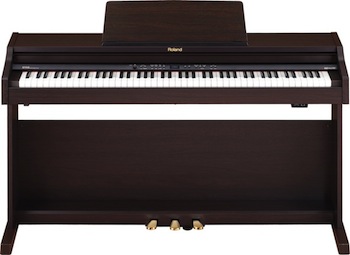
The Roland RP-301 was launched in 2011; the Roland RP-301R in 2011. That's a difference of 0 year, which suggests the underlying technology could be fairly similar.
Even the most recent instruments here are over five years old, which may mean they are no longer sold new by the manufacturer, and there may be newer models available.
Keyboard Type
All instruments being compared have full sized keys.
Number of Keys
All the instruments you are comparing have 88 keys.
Digital pianos often have 88 keys, as is commonly found on acoustic pianos. However, 76 and 73 key models are also available, which are more compact.
Weight of Keys
The two instruments you are comparing have fully weighted keys.
Most pianists prefer an instrument which has either fully weighted or semi-weighted keys, which provide closer realism to that of an acoustic piano.
Touch Sensitivity and Aftertouch
Both instruments have touch sensitive keys and neither has aftertouch.
Touch sensitivity is vital for piano players; aftertouch is not required for those wanting a pure piano experience but it can be useful to have (if it can be switched on or off) for use with other instruments.
Polyphony
The two instruments you are comparing both have 128. notes of polyphony.
A good figure for polyphony on a modern digital piano is a minimum of 96, preferably 128. Older and less expensive digital pianos had 64 or fewer notes of polyphony, which can lead to problems when playing certain pieces of music.
Number of Sounds
The Roland RP-301 has 30 and the Roland RP-301R has 54 sounds.
Digital pianos are primarily intended for replicating acoustic piano sounds, sometimes with additional keyboard instruments such as electric pianos, organs, harpsichord, clavichord and so on. Additional sounds may include strings and other instruments, but they are usually a bonus rather than a requirement, where the acoustic piano realism is more important. A selection of alternative acoustic pianos is a good inclusion.
Tutorials and Learning
Different manufacturers may include a range of tutorials and learning functions on their digital pianos. These are rarely as advanced as practicing with a human tutor or online learning, but can be a useful tool. Learning may include built-in songs, lighted keys, tempo adjustments, note correction and more.
Price
The Roland RP-301 is $2199 and the Roland RP-301 is $2199.
At least one of the instruments does not have a recorded price.
Digital pianos range in price from a few hundred dollars to tens of thousands of pounds.
Disclaimer: This page was created automatically based on the raw data avaialble in the specification sheets. It does not use AI to generate this, but rather looks for various patterns and reports on them in plain English. Errors, omissions and unclear text may occasionally be produced, for which we apologise in advance.