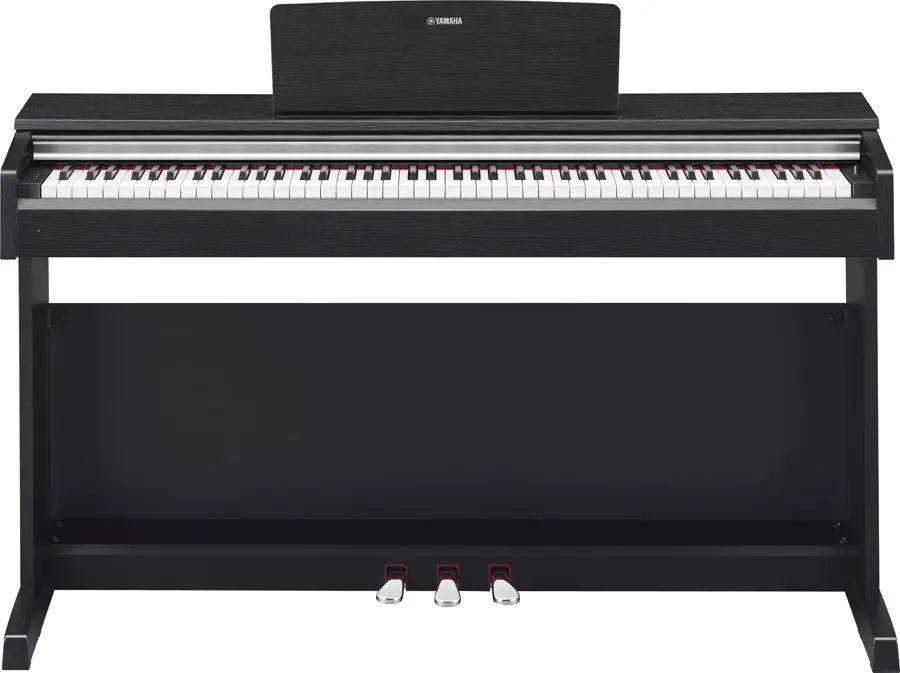
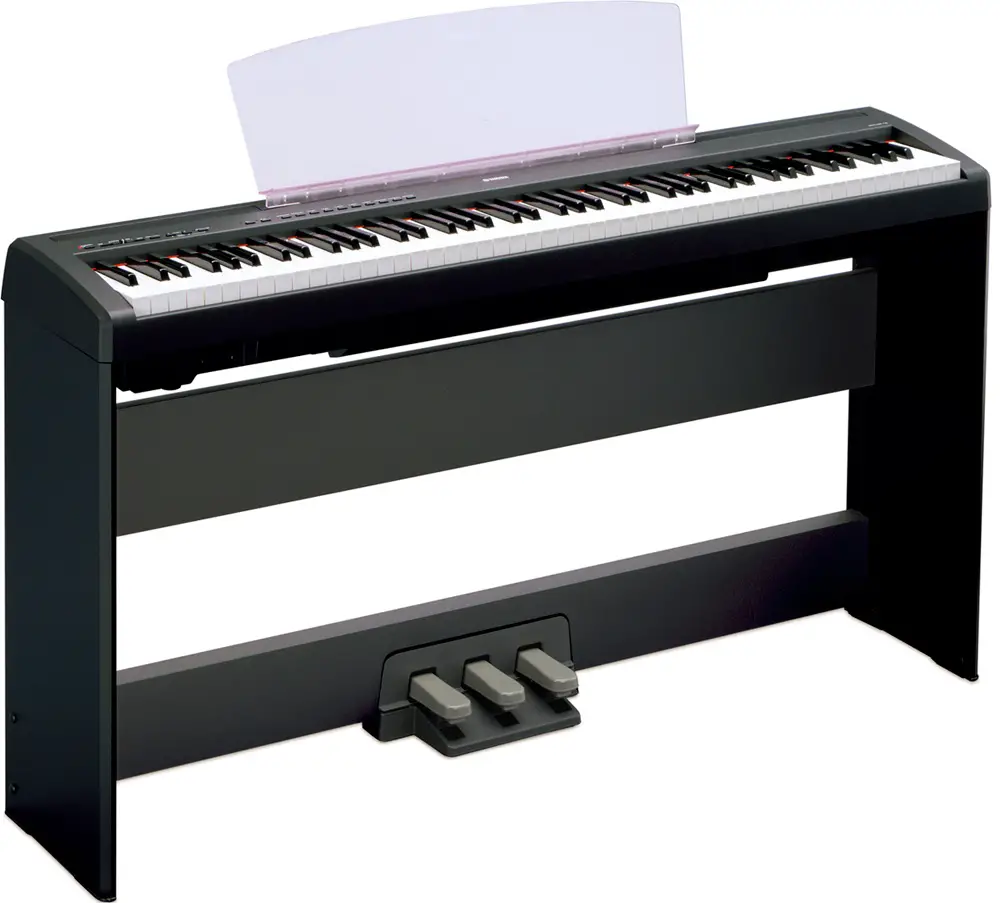
At first thought, mapping a suitably-equipped digital piano’s output to the MIDI standard seems like child’s play, certainly compared to other keyboard instruments, synths and the like which can generate and transmit far more musical data.

The Issue
A standard piano really only needs to transmit the note number being played, and convert the note velocity to either values 0-127 (original MIDI standard) or 0-65535 (MIDI 2.0). It can also send data about the pedals involved, which can vary somewhat, but even that is not a huge amount of data.
There’s no aftertouch to consider, or really any other controller if we’re simply talking about mimicking the performance of an acoustic piano.
That’s fine in a more closed environment, for performances on a single piano, or working in a simple DAW environment with the same instrument, and then moving on to mastering and recording. However, when it comes to multiple instruments, the use of MIDI files, collaboration and the like, things do get more complicated.

The fact is, each manufacturer (and even models from the same maker) will both encode and interpret MIDI velocity messages in different ways. While lower numbers will always be quieter than larger numbers, they don’t necessarily map between instruments.
The Piano Profile
To that end, the MIDI Association and a number of instrument manufacturers and software creators — including Yamaha, Steinway, Kawai, Roland, Korg, Kurzweil, Medeli, Synthogy, MIDI9, AmeNote and MIDI2 Marketing — have collaborated and created The Piano Profile — using the MIDI Capability Inquiry (MIDI-CI) core feature of MIDI 2.0. Instruments which enable the Piano Profile commit to a defined set of MIDI messages and a standardised response to them.
The goal stated in the specification is that “the performance of an acoustic piano piece on one device that supports the Piano Profile” can “be accurately rendered on any other device which also supports the Profile.”
It’s important to note that the nuances (or even extremes) of individual piano sounds are not in scope. Each piano has its own unique range and character of tone and timbre, and this profile does not (in fact, cannot) influence that.
It’s more about closing in on a consistent reproduction of player intent — musical dynamics and expression of the performer. Of course it means that very different piano tones will still produce a quite different result, but the general feel should remain the same as originally played.
To create the profile, reference recordings were captured on real instruments including the Yamaha Disklavier C6 and Synthogy’s Ivory sample libraries.
The Profile uses a Default Note On Velocity Curve, defining a precise mapping between the musical dynamics a performer intends, and the MIDI velocity values used to represent them.
As a vital part of much piano playing, the pedals are also included. The sustain pedal is mapped as a continuous controller, but it’s left to each instrument to determine how that’s interpreted — not all digital pianos have half-pedalling and continuous support.
The Profile also addresses the sostenuto and una corda pedals, as well as a set of new registered controllers which are far from essential on every piano but are found on higher-end models — including piano size and type, scale tuning and temperament, dynamic range, lid position, hammer hardness, soundboard and sympathetic string resonance, and various mechanical noises such as damper, hammer thump, key action.
The Profile does not do away with the alternative velocity curves many instruments implement to effectively allow alternative touch sensitivity options.
Practical Uses
The Profile is designed for the modern world of piano performance and learning, and is useful for online live broadcasting, online lessons, MIDI streaming, music production and DAW use, and online sales / sharing of standard MIDI files.
The level of collaboration is encouraging, though it should be noted that it could take quite some time for this to filter through to a wide range of instruments. Perhaps some retrofitting might be possible, or software which can convert MIDI files for a particular non-PP instrument to receive.