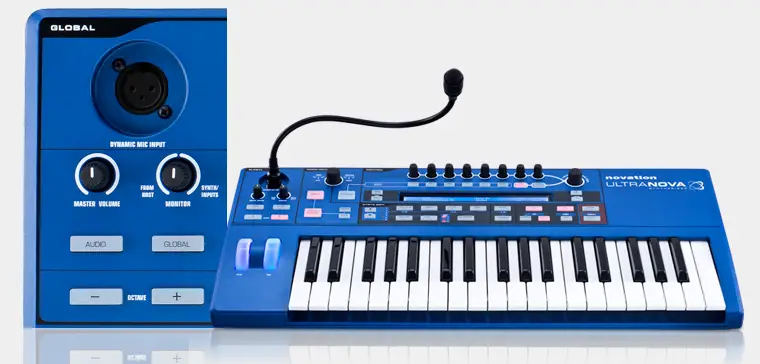
Novation shows off UltraNova [NAMM11]

January 17, 2011

Novation used this year’s Winter NAMM to show off its latest Nova hardware analogue-modelling synthesiser: the UltraNova.

Though it was ‘born’ last year, this has been a major trip out for the latest Nova incarnation.

UltraNova is a single-part synth taking the legendary Supernova II synth engine as a starting point and packing it with the latest technology. It now has brand new features including wavetable synthesis, even more powerful filters, a software editor and a revolutionary new touch-sense performance mode.

Key features

  • Brand new Nova-series synth engine based on Supernova II:
    • Single part with up to 18 voices, 14 filter types, 36 wavetables, 5 effect slots
    • Patch Browse enables you to browse 300 sounds by type & genre
  • Touch-sense controls enable totally new sound-shaping & performance:
    • Trigger envelopes/LFOs/filters/FX by just touching the encoders
    • Large rotary control instantly allows you fine control of any parameter
  • Totally gig-able with 37 full sized keys, a vocoder, and loads of controls:
    • Voice optimized 12 band vocoder with gooseneck mic
    • High quality key bed with aftertouch for expressive playing styles
  • Software plug-in editor and Patch Librarian for full visual editing:
    • Plug-in editor allows you to view and edit in with software
    • Software Patch Librarian a organise, store and share unlimited patches
  • Built-in 2 in 4 out USB audio interface and it can be bus powered:
    • UltraNova can be used to stream audio to and from a host computer
    • Stereo main (analogue & SPDIF) and aux outputs, and MIDI in/out/thru ports

The Software Editor

UltraNova has a powerful software editor that enables visual editing of all parameters. It can be used within DAWs as a plug-in editor:

The Modulation Window

ultranova software editor

The Oscillator Window

Animate Window

The Filter Window

The Patch Librarian

UltraNova also ships with a patch librarian that can be hosted on Mac or PC. This enables the user to save an unlimited number patches to the host computer and organise them into folders.

Each of the 300 patches that ship with UltraNova have been tagged to make it easy to search by category and genre from the hardware synth or the software patch librarian.

Vocoder

UltraNova has a 12 band vocoder and ships with a dynamic gooseneck microphone. In addition to putting your voice through the vocoder (via the microphone) you can also process other sounds by putting instruments – or pretty much anything – into UltraNova’s stereo line inputs on the back panel.

ultranova vocoder

Specifications

Synth engine
• Up to 18 note polyphony (dynamic voicing)
• Mono-Timbral

Per patch:
• 3x oscillators
• 1x noise generator
• 2x ring modulators

Waveforms include:
• Square, sine, tri, sawtooth, pulse, 9x saw:pulse combinations.
• 20x digital waveforms
• 36x wavetables

Filtertypes:
2x filters per patch
• low pass no resonance 6dB per octave
• low pass 12dB
• low pass 18dB
• low pass 24dB
• band pass 6:6
• band pass 6:12
• band pass 12:6
• band pass 6:18
• band pass 18:6
• band pass 12:12
• high pass no resonance 6dB per octave
• high pass 12dB
• high pass 18dB
• high pass 24dB

Sources:
20 modulation slots per patch
• 6x envelope generators
• 3x LFOs.
• Aftertouch
• Velocity
• Key scaling/track
• Mod wheel
• Expression pedal

Total of 66 Destinations including:
• Oscillator pitch, pulse width, wavetable index, level and sync
• Filter cutoff, resonance, envelope settings
• Effects parameters and send levels
• Recursive modulation (modulating modulation sources themselves)

5 Effects slots per patch
• Distortion – up to 2 instances
• Compressor – up to 2 instances
• Chorus/Phase – up to 4 instances
• Delay – up to 2 instances
• Reverb – up to 2 instances
• Gator
• EQ
•12 band vocoder
• Arpeggiator – 33 patterns
• Chord function – lock up to 10 notes
• Patch storage up to 512 on hardware (ships with 300 factory patches)

Hardware

• 144 character LCD
• 8x detented touch sensitive encoders
• 1x large smooth encoder (with back-lit filter lock buttons)
• 1x large patch select/speed dial encoder
• 2x volume & monitor mix dials
• 39 LED lit/indicated buttons
• Pitch wheel (LED lit)
• Modulation wheel (LED lit)
• 37 note keyboard with velocity and aftertouch
• XLR dynamic mic input
• 2x ¼” jack inputs
• 2x ¼” jack outputs
• 2x ¼” jack aux outputs
• 1x ¼” jack headphone output
• SPDIF digital output on RCA connector
• Expression pedal on ¼” jack input
• Sustain pedal on ¼” jack input
• MIDI in/out/thru
• 12 volt power input
• USB port (UltraNova can be powered via USB)
• Kensington Lock port

Novation Automap 3.8 announced [NAMM11]

January 17, 2011

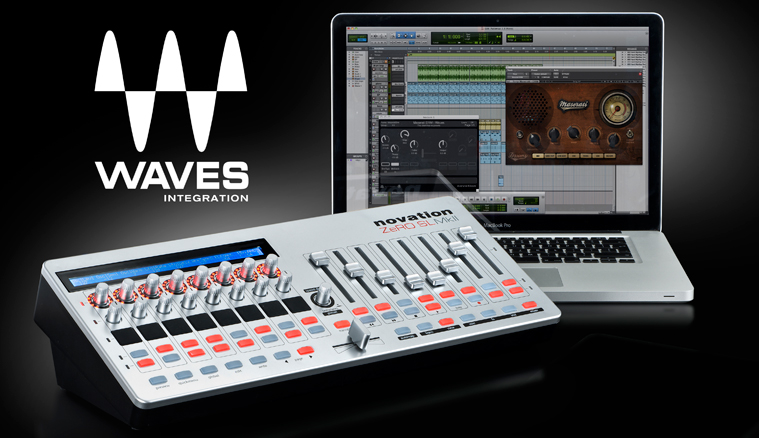
NAMM 2011 saw Novation announce Automap 3.8, bringing tighter integration for Waves users.

Automap is control software that comes free with all Novation controllers. The latest update provides total integration with all Waves plug-ins – just open up a Waves plug-in and it will automatically map to Novation hardware (this will require the forth-coming Waves update). Automap runs with Novation’s SL MkII and Nocturn ranges of controllers. It is universally recognised as a powerful control solution and includes features such as ‘Learn’ which enables instant mapping of software parameters to hardware controls.

novation automap 3.8

iConnectMIDI: link musical gear to Apple iPad/iPhone/iPod touch [NAMM11]

January 17, 2011

There are plenty of music creation apps for iPad but they don’t all necessarily have the ability, on their own, to interface with other equipment.

Enter iConnectMIDI, a MIDI interface designed specifically for Apple’s portable products.

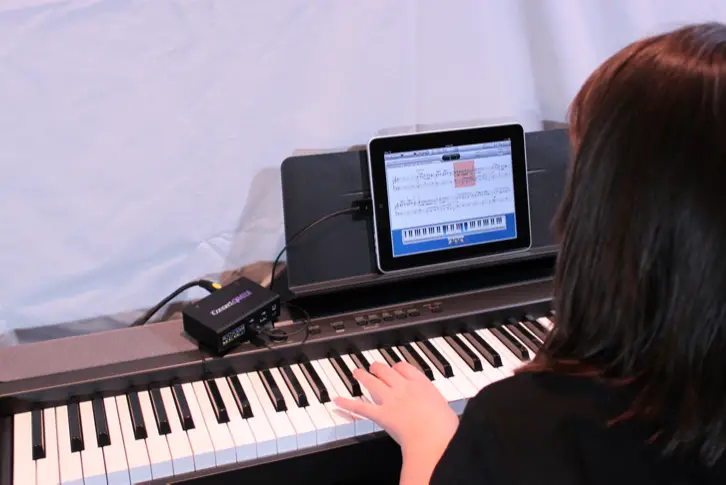
The box can be connected up to an iPad, iPod touch or iPhone’s dock, as well as to PCs, keyboards and other MIDI devices. It lets users put their Apple gear right in the loop, and can be particularly impressive when used with the iPad.

Apple’s mobile operating system, iOS version 4.2, uses a CoreMIDI framework which is fully compatible with the iConnectMIDI.

The box features 2x mini USB device ports, 2×2 MIDI DIN ports, and one USB host port. It runs off a 5V DC connection.

The iConnectMIDI is constructed from rugged steel and finished in black powder.

iConnectivity.com

Cherub shows off music gadgets [NAMM11]

January 16, 2011

Cherub has shown off a few gadgets which will be of interest to keyboard and piano players.

First up comes the WMT-280 Rhythm Trainer, a 3-in-1 tuner, metronome and tone generator with a 20ms response time. OK, so the tuner may not be of great use (though you can always be the best friend of the guitarist who’s forgotten his) but the metronome functionality is always useful even if your keyboard has it’s own built in (you can bet the audio output has been rerouted somewhere so you can’t hear it).

cherub rhythm trainer

They’re pretty nifty looking, too, available in four colours — black, red, orange and blue.

Alternatively, why not try the WMT-220 Metro-Tuner, a stylish looking metronome with a treble clef pattern on the front.

Other Metro-Tuners with more traditional looks include the WMT-578, WMT-555C, WMT-568T and WMT-588C.

Designed specifically for beginner piano players, the WSM-260 Piano Mate is an advanced digital metronome available in black or white.

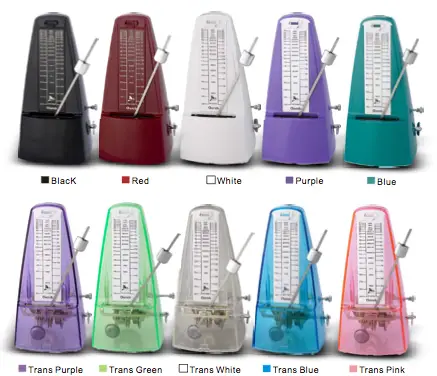
cherub mechanical metronome

If you’d prefer a traditional mechanical metronome, take a look at the WSM-330, available in a wide range of colours.

More information is available at CherubTechnology.com

Casio introduces new compact keyboards and workstations [NAMM11]

January 16, 2011

Casio has unveiled four new keyboards at this year’s Winter NAMM show.

The WK-6500 and CTK-6000 are replacements for the heralded WK-500 and CTK-5000 models. The new additions offer new tones and rhythms, a larger backlit LCD display and a new 17 track sequencer with editing tools for creating new sounds and music composition.

Equipped with over 200 different styles of music from around the world, 670 instrument tones, 100 DSP effects and a registration mode for live performance, the new WK-6500 and CTK-6000 have all the tools to edit, create and perform music.

The flagship models, WK-7500 and CTK-7000, deliver an unprecedented level of power and music making capabilities. Combined with a 17 track sequencer, the CTK-7000 and WK-7500 have the ability to record audio.

Compositions created on the CTK-7000 and WK-7500 can be recorded as an audio file on a SDHC storage card. Even sounds from external instruments can be mixed and recorded. Users can plug-in a microphone, guitar, bass or other instrument and play along with instrument tracks from within the keyboard.

All of the sounds get mixed and saved as a stereo audio file which can be shared with friends and family via computer or put on an audio CD for label executives. The WK-7500 and CTK-7000 models also feature large LCD display screens, nine physical sliders for mixing capabilities and an organ drawbar mode.

Full specifications aren’t yet available, but we’ll be sure to let you know as soon as we have information.

The keyboards are due to launch in February 2011, with MSRPs ranging from $299.99 to $599.99.

Korg Wavedrum Oriental dynamic percussion synthesiser revealed [NAMM11]

January 16, 2011

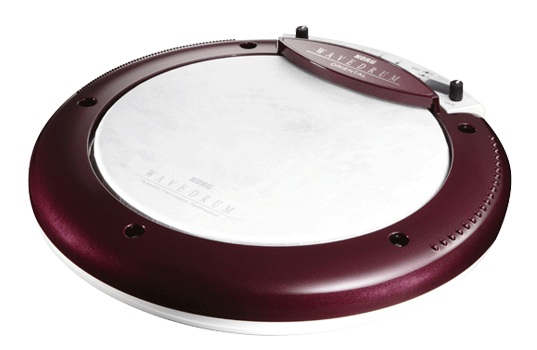
Korg has announced its limited edition Wavedrum Oriental, a percussion synthesiser featuring a wide range of Arabic percussion sounds.

Exotic sounds to Western ears, Arabic percussion is indispensable to belly dancing, world music and other popular genres. Many acoustic percussion instruments can produce a whole range of sounds simply by the way their rims and skins are hit, and the Wavedrum Oriental aims to replicate this with a direct physical method of performance.

korg wavedrum oriental percussion synthAll the sounds faithfully simulate the distinctive ways in which the tone is affected by subtle nuances in playing technique and the position of the strike on these acoustic instruments – the Darbuka with its thin single skin, the Riq with its single skin and jingles, and the dual-skinned Bendir.

There are 150 preset sound programs plus 150 user programs.

An optional percussion stand is also available.

Korg nanoSERIES2 trio of slim USB MIDI controllers revealed [NAMM11]

January 16, 2011

Korg has shown off three space-saving, feature rich USB MIDI controllers designed to fit right in with your laptop or desktop computer keyboard.

The slim design of the nanoSERIES2 controllers means that precious desktop space isn’t wasted, and the three variants mean there should be a solution for everyone (or, simply buy all three).

First up is nanoKEY2, a slim unit comprising of a 25 key velocity-sensitive keyboard, and ideal for entering music notes either in real or step time.

The nanoPAD2 is ideal for entering drum parts, as it features 16 responsive pads and an X-Y touchpad.

The nanoKONTROL2 includes a range of knobs, faders and switches, making it great for controlling music production software.

Here’s more information on all three units:

nanoKEY2

Korg nanoKEY2

  • Low-profile, 25-key USB-MIDI keyboard, ideal for use with laptop and netbook computers
  • Advanced-design keybed offers improved accuracy and velocity-sensitive keys.
  • Sustain button – ideal for entering piano parts!

Accurate, responsive, and great-feeling keybed

The nanoKEY2 features an advanced and up-to-date design. By combining the great-feeling “touch” that Korg has developed for its professional MIDI keyboards and the low-profile “thinness” of recent computer keyboard innovations, the nanoKEY2 provides a superior keyboard response for its class and size. It’s designed with ample key width and plenty of space between the keys, reducing the chances of a wrong note. The touch and velocity response have been carefully tuned, as only a manufacturer with Korg’s track record and know-how can, ensuring that your expressive performance will be conveyed accurately to your software.

Control buttons provide simple yet versatile control

The Octave Shift buttons – borrowed from Korg’s MIDI controllers – allow the overall pitch to be shifted four levels, either UP or DOWN, in octave increments. When used in conjunction with the Key Transpose feature, the nanoKEY2 can access the entire range of the notes in the MIDI spectrum. For enhanced performances, the nanoKEY2 also provides Pitch Bend buttons, a Modulation button, and a Sustain button; one that’s indispensible for piano or electric piano performance. For each of these buttons, the on/off switching speed can be specified over four levels (using Korg Kontrol Editor), ensuring smooth changes that are appropriate for your performance.

Korg Kontrol Editor software

The nanoKEY2 works with the “Korg Kontrol Editor” software – available free on the Korg website. Load it into your computer, and use it to make detailed customized settings. Choose from a total of four velocity settings: three velocity curves or fixed velocity; specify the control change messages transmitted by the modulation button and the sustain button.

USB power for an uncluttered setup

Just connect a single USB cable from your computer to the nanoKEY2, and you’ve got a quick and portable music production system. Power and USB-MIDI data travels down the same wire for a clean, efficient workspace.

nanoPAD2

Korg nanoPAD2

  • Low-profile pad controller – excellent for playing or entering drum data
  • Sixteen solid, responsive, and velocity-sensitive trigger pads
  • Control multiple MIDI parameters via the X-Y Touchpad

Sixteen pads in a compact body

Like all nanoSERIES2 controllers, the nanoPAD2 had to be compact, lightweight and sized to work well with any laptop or desktop computer. In addition, the nanoPAD2 also had to pack in 16 great-feeling and dynamic-sensing pads – as well as leaving room for the X-Y touchpad! The Korg nanoPAD2 does all this and more. In fact, there are four banks of pad assignments, providing a total of 64 pads setups.

Dynamic trigger pads capture all your performance nuances

The sixteen velocity-sensitive pads provide excellent response to your fingertips, and also realistically convey the playing feel to your sequencer or DAW software, ensuring that your drum parts will be full of life. By switching between the four scenes, you can experience 64 different pad assignments.

Create musical phrases using the X-Y touchpad, Touch Scale, and Gate Arp features
The X-Y pad can be used to control multiple synthesizer parameters. In addition, the new “Touch Scale” function lets you intuitively play phrases on the X-Y touchpad, just as on the Kaossilator. You can choose from sixteen different scales, and specify the root key and note range to ensure that your performance stays within your song. The “Gate Arp” function, borrowed from the Kaossilator Pro, transmits note data based on tempo; Tap tempo and tempo sync are supported. Combined with the Touch Scale, the Gate Arp allows you to play tempo-synchronized phrases and rhythms simply by stroking the X-Y pad or playing the pads.

Korg Kontrol Editor software

The nanoPAD2 works with the “Korg Kontrol Editor” software – available free on the Korg website. Load it into your computer, and use it to make detailed customized settings. Choose from a total of four velocity settings: three velocity curves or fixed velocity. You can also specify note numbers, create user scales for the Touch Scale function, assign chords, assign control change messages, and save your settings.

USB power for an uncluttered setup

Just connect a single USB cable from your computer to the nanoPAD2, and you’ve got a quick and portable music production system. Power and USB-MIDI data travels down the same wire for a clean, efficient workspace.

nanoKONTROL2

Korg nanoKONTROL2

  • Low-profile, multi-function control surface
  • New track select and marker advance parameters
  • Supports numerous software titles including major DAW programs

Convenient, compact control surface, with easy setup for immediate use

In a body proportioned to fit perfectly in front of your laptop computer, the nanoKONTROL2 provides eight channels of the controllers you need to control your music software. The nanoKONTROL2 also features a dedicated transport control section. The buttons have been carefully selected to be useful with your software, ensuring simple and intuitive control. Many software titles – including major DAW programs – are supported, dramatically reducing the need to make complicated connection settings.

Complete control for your DAW or software synthesizer

A knob, fader, and three switches are provided for each of the eight channels, respectively assigned to pan, volume, and solo/mute/record. This arrangement is a real convenience when recording automation for multiple channels. There’s also a marker button, making it easy to assign marks at important points in your song for more efficient recording and song production. When using a software synthesizer, you can assign parameters to the desired controllers for easy control. For example you could use the faders to control the ADSR of an envelope generator, and use the knobs to control the filter’s cutoff frequency and resonance, etc.

Korg Kontrol Editor software

The nanoKONTROL2 works with the “Korg Kontrol Editor” software – available free on the Korg website. Load it into your computer, and use it to make detailed customized settings. For example, the minimum and maximum values for each control change message can be specified.

USB power for an uncluttered setup

Just connect a single USB cable from your computer to the nanoKONTROL2, and you’ve got a quick and portable music production system. Power and USB-MIDI data travels down the same wire for a clean, efficient workspace.

Specifications

nanoKEY2 Specifications

Controllers:

  • Keyboard: 25-key with velocity and 4 velocity curves
  • Pitch up/down buttons
  • Octave Shift up/down buttons with -4 to +4 octave range
  • Modulation button
  • Sustain button

Corresponding Software:
Host applications corresponding to MIDI input

Connections:
mini-USB

Power:
USB bus power

Power Consumption:
USB bus power: less than 100 mA

Dimensions:

  • Size (W x D x H): 325 x 83 x 13 mm/ 12.80 x 3.27 x 0.51 inches
  • Weight: 244 g/ 0.54 lbs.
  • Accessories: USB cable

nanoPAD2 Specifications

Controllers:

  • 16 trigger pads with velocity and 4 velocity curves
  • X-Y pad
  • HOLD button
  • GATE ARP button
  • TOUCH SCALE button
  • KEY/RANGE button
  • SCALE/ARP button
  • SCENE button

Memory:
4 user scene memories

Corresponding Software:
Host applications corresponding to MIDI input

Connections:
mini-USB

Power:
USB bus power

Power Consumption:
USB bus power: less than 100 mA

Dimensions:

  • Size (W x D x H): 325 x 83 x 16 mm/ 12.80 x 3.27 x 0.63 inches
  • Weight: 285 g/ 0.63 lbs.
  • Accessories: USB cable

nanoKONTROL2 Specifications

Controllers:

  • 8 knobs
  • 8 sliders
  • 24 buttons
  • Transport buttons: REW/FF/STOP/PLAY/REC
  • CYCLE button
  • MARKER button
  • TRACK button

Corresponding Software:
Avid Pro Tools/Apple Logic, GarageBand/MOTU Digital Performer/Steinberg Cubase/Ableton Live/Cakewalk SONOR
Software that can be controlled by control change message

Connections:
mini-USB

Power:
USB bus power

Power Consumption:
USB bus power: less than 100 mA

Dimensions:

  • Size (W x D x H): 325 x 83 x 30 mm/ 12.80 x 3.27 x 1.18 inches
  • Weight: 293 g/ 0.65 lbs.
  • Accessories: USB cable

System Requirements:

Macintosh:

  • Supported OS: Mac OS X 10.4 or later
  • Supported Computer: Apple Macintosh with USB port, satisfying the operating requirements of Mac OS X or Apple Macintosh with PowerPC supported

Windows:

  • Supported OS: Microsoft Windows XP SP3 (32bit), Microsoft Windows Vista SP2 (32bit, 64bit), Microsoft Windows7 (32bit, 64bit)
  • Supported Computer: Computer with USB port, satisfying the operating requirements of Windows XP/ Vista/7 (Intel USB chipset recommended)

Korg Kronos Music Workstation is here [NAMM11]

January 15, 2011

Check out our Korg Kronos web site for the latest news, information, pricing, availability and resources.

There are some pretty great music workstations coming on to the market this year. Korg has already unveiled its Pa3X arranger workstation, and Yamaha’s Tyros4 is also with us, so how does Korg’s Kronos stack up against them?

Well, purely subjectively and without yet looking in detail at the specifications, I’d have to say I’d be really happy to get my hands on one.

korg kronos music workstation

Of course you’d expect Korg to lay on the superlatives, claiming it to be a “milestone in synthesis and workstation evolution”, but first impressions certainly don’t disappoint.

Let’s take a look at the long list of features:

Nine Engines; a Universe of Sound
KRONOS unites nine individual synthesis engines in a single instrument, each providing the finest sound creation techniques available. Together, they represent not only the rich legacy of Korg, but the history of the electronic keyboard industry itself. Get ready for classic sounds from timeless instruments; unique sounds that once startled the world; and new sounds that have only now become possible.

KRONOS Highlights

  • Next-generation workstation with enhanced performance features
  • 9 Sound engines, each offering a unique sound-creation technology (see list below)
  • 16-part Combis allow all engines to function together in perfect harmony; Dynamic Voice Allocation keeps the polyphony high.
  • Available with 61, 73 or 88 keys 73 and 88 key models feature Korg’s finest RH3 Graded Hammer Action 61 key model borrows the responsive synth action from the Korg M3-61
  • Comprehensive interface, based around a new large 8” TFT TouchView™ display
  • Virtual Memory Technology (VMT), aided by a fast SSD (Solid State Disk) provides high polyphony and massive, ultra-long, and unlooped samples; offering unheard of performance from a hardware instrument
  • Smooth Sound Transition: this often-requested feature allows held or sustained notes to keep sounding when changing sounds or modes.
  • Set List mode: Organize the Programs, Combis, and Songs you need to perform your set in a single, easy-to select screen – including performance notes!
  • Use up to 16 premium-quality effects at once; individual effects rival dedicated units
  • 12 Insert effects?- 2 Master effects?- 2 Total effects
  • On-board sequencer offers 16 MIDI tracks + 16 audio tracks (24-bit, 48kHz recording quality)
  • Open Sampling System – Instant sampling and resampling from any mode: Program, Combination or Sequencer.
  • Sophisticated KARMA® technology generates infinitely variable performance-driven phrases, musical effects, and backing tracks to catalyze your creativity
  • Expanded Drum Track for play-along grooves and inspiration
  • Signature sounds created with guidance from world class musicians

The Next-Generation Workstation for Live, Production, and Sound Design
The KRONOS Music Workstation is the single instrument designed for live performing musicians; for artists creating in a studio or computer-based production environment; and for musicians and sound designers seeking the ultimate synthesizer. In creating KRONOS, we have listened to many musicians and have heard their requests. And KRONOS delivers.

LIVE – for the performing keyboard player
KRONOS provides the absolute finest in keyboard sounds; accurate and responsive to the player’s technique. The expansive control surface offers joysticks, sliders, knobs, switches, a ribbon controller, assignable pedal inputs, and of course our improved resolution color TouchView™ display. New additions include our easy-to-use Set List mode for song-specific and gig-ready sound selection, and our Smooth Sound Transition feature. Plus, we’ve included our finest RH3 keybed on both the 73 and 88 key models for a solid performance; the 61 key enjoys the responsive action shared with the Korg M3-61.

PRODUCTION – satisfying the producer, music director, and musician
For many, the studio is where the work gets done; from laying down tracks, to building up grooves for an on-stage extravaganza, to delivering the soundtrack for today’s media rich world. For these creative leaders, Korg has equipped the KRONOS Music Workstation’s sequencer with 16-track MIDI tracks plus 16 audio tracks, our Open Sampling System, dazzling hi-fidelity effects, as well as flawless plug-in integration with many popular DAW platforms. Of course, KRONOS is equipped with phenomenal sound, dynamic drums, and an impressive array of premium sound effects. Add to that the ability to use KARMA, the Drum Track, and the sequencer’s RPPR to greatly speed up and enrich the music creation process.

SYNTHESIS – programming joy for the enthusiast and sound designer
In addition to being Korg’ premier workstation, KRONOS has it in its blood to satisfy the programmer, sound designer, and synthesizer enthusiast; the musician who dreams of turning visions of the cosmos into sound, of tweaking parameters to conjure invisible sounds from the ether. KRONOS rekindles Korg’s founding dream that is at the core of synthesis: the exhilaration and enjoyment of creating new sounds, sounds never before heard! A variety of exclusive Korg technologies drive the synth engines to provide astounding results – VMT (Virtual Memory Technology); CMT (Component Modeling Technology); Physical Modeling, Digital Synthesis, Wave Sequencing, MDS (Multi-Dimensional Synthesis); KARMA® and more!

Nine Synthesizer Engines, United in One Instrument
KRONOS contains nine distinct synthesizer/sound engines. While each is worthy of a separate product in its own right, KRONOS brings them all together into a single, integrated musical instrument. Dynamic voice allocation and new technologies allow all sound engines to smoothly share a stable, enhanced hardware platform. The results are nothing less than spectacular.

SGX-1 Premium Piano – Piano sound engine
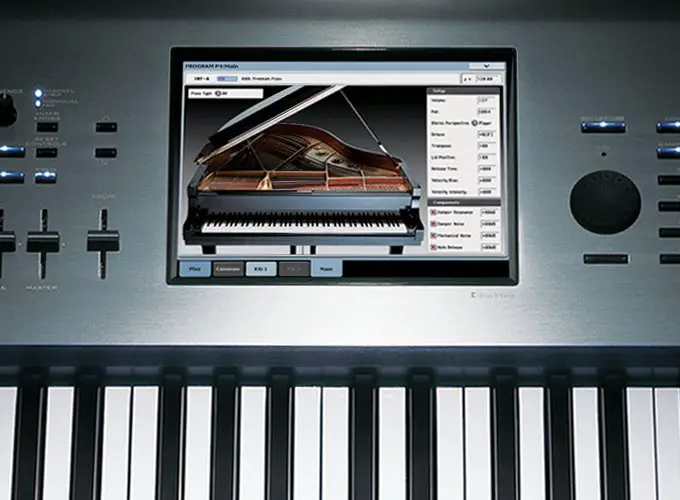
You’ve never heard pianos like this on any workstation. To accurately capture the rich character of a concert piano, Korg abandoned working within the limitations of existing sampling methods and took advantage Virtual Memory Technology (VMT), able to play large samples directly from the internal high-capacity Solid State Disk (SSD). The SGX-1 Premium Piano sound engine offers two distinctive grand pianos; a rich German D piano, and a robust Japanese C model. Each uses superb, un-looped stereo samples sampled at eight velocity levels for each and every key. Thoughtful attention to detail preserves the realism and warmth of the piano sound; this extends even to sampling and reproducing the body resonances of the grand piano, as well as the mechanical noise that occurs when the keys are played, or the damper pedal is pressed and released. The foundation of any keyboard instrument is the piano; the SGX-1 engine allows KRONOS to confidently deliver on this sonic ideal.

EP-1 MDS Electric Piano – Electric piano sound engine
Our new EP-1 sound engine is dedicated to faithfully recreating six of the most popular classic electric pianos. The MDS (Multi-Dimensional Synthesis) technology eliminates the transitions between velocity-switched samples, and does away with the unnatural behavior of looped samples. It also provides the user with unique control over the tines, reeds, and noise elements that make up the essential character of these timeless and coveted electromechanical instruments. The MDS sounds respond smoothly to the subtleties of the player’s keyboard touch. This technology also delivers an astounding dynamic range – far superior to what one might expect from digital technology – so that the energy of climactic passages is accurately preserved. Each of the six electric piano models provides realistic simulations of the period amp, cabinet, speaker, and even the hard-to-find vintage effects that gave the original instruments their distinctive sound. From the sounds, to the touch, to the effects; every element has been coordinated in a single package to create the ultimate electric piano experience.

CX-3 Tonewheel Organ – Tonewheel organ sound engine
The original Korg CX-3 combo organ went on sale in 1980. Loved by musicians around the world, this classic organ reappeared in 2000 as a new product with the same name, but using the latest technology of the time to faithfully model the tonewheel organ sound. In KRONOS, the CX-3 engine precisely models this classic tonewheel instrument. Proprietary Korg technology has been used to perfectly reproduce the vacuum tube amp, and effects such as Vibrato/Chorus and the “must-have” rotary speaker. Even the instability, fold-back, leakage, and noise of the tonewheels have been obsessively analyzed and recreated. Take full advantage of Korg’s exclusive EX mode and switch from 9 to 18 drawbars (13 footages plus 5 to define the percussion) and generate even richer and more detailed sounds. The organ sounds heard in legendary performances – some recreated here by the original artists – are now yours for the playing. Go ahead and experience these classic organ sounds, reborn for the present day.

HD-1 High Definition Synthesizer – Flagship PCM, sampling and Wave Sequencing sound engine
We named the HD-1“High Definition” because of its superior sound, starting with Korg’s proprietary low-aliasing sample playback oscillators, full?bandwidth multimode resonant filters, and extraordinarily fast & smooth envelopes and LFOs. Once again, our SSD and Virtual Memory Technology (VMT) gives the HD-1 access to a larger sample set – gigabytes in size – than could be normally stored using internal memory. The HD-1 covers all of the essential sounds in exquisite detail, from orchestral to classic rock to hip-hop, all instantly available. The extensive array of samples provided by KRONOS is unparalleled by previous hardware synthesizers or samplers, and is a superb fit for film, video and sound effect work.

Wave Sequencing
First introduced on the Korg WAVESTATION, and used here as part of the HD-1, Wave Sequences play a series of samples over time, creating distinctive rhythmic timbres or smooth, complex evolving sounds. Additionally, step-sequencer modulation outputs allow Wave Sequences to control any modulate-able Program parameter.

Ambient Drums
The HD-1 sound engine also includes our “Ambient Drums.” Take advantage of this rich sample content to create incredibly realistic drum parts. The Ambient Drums feature two kits. Each provides three different mic’ing positions, capturing the whole kit, (with the snare on and off), plus the individual hits. The HD-1 voice architecture allows the custom blending of the drum’s direct sound and ambient sound layer, adding a finished quality to the track.

AL-1 Analog Synthesizer – High-fidelity analog modeling sound engine
Feature-packed, the AL-1 is the same premium analog modeling sound engine that was first featured on the Korg OASYS, the Open Architecture Synthesis Studio back in 2005. Its patented ultra?low?aliasing oscillators (using completely different technology than the HD?1) recreate all the power and glory of true analog synthesis— without the artifacts that can plague lesser instruments. Morphing waveforms allow you to change the oscillator shapes in real?time. Resonance modeling lets you choose between classic filter sounds, and the extraordinarily flexible MultiFilter lets you create your own hybrid filter shapes. Hard sync, analog?style FM, drive, low?boost, and ring modulation offer plenty of tone-twisting power.

MS-20EX Legacy Analog Collection – Analog modeling sound engine
Debuting in 1978, the MS-20 unified a 37-note keyboard with a vertically oriented control panel, and was easily obtainable by those smitten by expensive and gigantic furniture-sized synthesizers. With a thick and solid sound, aggressive filters, and patching that opened up limitless potential for creating sounds, the MS-20′s rich personality captivated countless synth freaks. Using Korg’s CMT (Component Modeling Technology) the MS-20EX faithfully reproduces the MS-20 while dramatically expanding its patch panel functionality. Modulate filters with audio-rate oscillators; turn audio inputs into control signals; control all of the original knobs with mod sources including additional envelopes, LFOs, and real?time controllers. It’s a tweaker’s dream, but even without the patch panel, the MS-20EX would make waves with its unique, aggressive tone—due in large part to its signature filters, which are completely different from those in either the AL-1 or the PolysixEX. And of course the KRONOS version is now majorly polyphonic.

PolysixEX Legacy Analog Collection – Analog modeling sound engine
The Polysix first appeared in 1981, offering six-voice polyphony, program memory, and a surprisingly competitive price tag. With its self-oscillating four-pole filter, smooth analog oscillator and sub-oscillator, plus a lush Chorus/Ensemble effect, the PolysixEX extends the abilities of the original in many creative ways. The strings and pads that were such a major feature of the Polysix will be invaluable when you need the sounds of the early ’80s. The classic arpeggiator built into the original Polysix is also provided. We’ve added modulation of every control on the front panel, for a world of sounds impossible on the original. It’s also very well-suited to hands-on control via the KRONOS’ Tone Adjust; with a knob, slider, or switch for almost all of the original Polysix controls. As a bonus, it’s also capable of extremely high polyphony.

MOD-7 Waveshaping VPM Synthesizer – VPM/Waveshaping/PCM processing sound engine
Combine Variable Phase Modulation (VPM), wave-shaping, ring modulation, samples, and subtractive synthesis, plus a modular patch?panel system, and you have the MOD-7. Exceptionally versatile, it offers everything from classic FM keyboards, bells and basses (including the ability to import sounds from vintage DX synths) to rhythmic soundscapes and sparkling, epic pads. “Vast” sample?mangling capabilities, with incredible flexibility and power, let you create intensely rich processing environments: combine multiple stages of filtering, waveshaping, and ring modulation – even use samples as FM modulators – all patched together however you like.

STR-1 Plucked String Synthesizer – Physical modeling sound engine
Based on the physical modeling know-how Korg developed over the course of many years, this struck/plucked-string physical modeling sound engine takes advantage of cutting-edge technology. The STR-1 begins with highly playable sounds whose tone responds to your touch in ways that are difficult for a PCM sound engine to replicate. These include acoustic guitar, electric guitar, harpsichord, clavinet, harps, bells, and ethnic instruments. Then the STR-1 goes beyond, allowing the creation of sounds that obey physical laws, but that don’t exist in reality. Play harmonics on a metal bar “plucked” by a piano or sing into a guitar string; with the STR-1, it’s all possible. You can also process samples and live audio input through the physical model—including audio feedback from any of the KRONOS effects! While some of the KRONOS engines look back in time, this a sound engine of the future, one that allows the synthesizer programmer to construct truly new sounds.

Premier Artist Contributions
In order to take full advantage of these nine sound engines, Korg called on respected musicians to guide our sound design team towards their individual ideals. Responding positively, numerous world-class players contributed their time, energy, and critical listening to help us zero in on making the sound respond the way they hear it! Certain artist signature sounds were tested, judged and tweaked by the likes of Jordan Rudess, Russ Ferrante, Lyle Mays, George Duke, Tom Coster, Jeff Lorber, Frank McComb, John Novello and several other artists known for their serious love of sound and for their critical, demanding ears.

Korg’s Rock-Solid Workstation Integration Puts it all Together
Packed with unlimited sound potential, KRONOS is much more than a synthesizer. KRONOS comes complete with all of the extras required of a modern workstation, plus so much more. From music production to live performance, the KRONOS Music Workstation integrates a world-class list of tools into a single, reliable instrument. Under the hood, all nine engines share the same hardware, with no separate cards to manage or polyphony barriers between them—and no “CPU overs” to worry about. KRONOS dynamically allocates power between the engines as you play, automatically and in real time, providing an integrated experience no PC can match. In addition, KRONOS smoothly functions as a plug-in with many popular DAWs, providing your studio with native, unprecedented sonic power.

KARMA
First appearing on Korg’s Karma Music Workstation in 2001, this revolutionary algorithmic music technology instantly produces sophisticated phrases, drum grooves and full-blown backing tracks. Based on the notes and chords you play and the intuitive operations you perform with the knobs, sliders, and switches, you’ll easily produce musical effects that exceed anything you imagined. Now in its greatly-enhanced second generation and offering features like KARMA Wave-Sequencing, Note Mapping and 8 scenes per layer, KARMA is standard equipment on your new KRONOS. It will expand your conception of a song, and will be an enormous asset to your live performances.

Drum Tracks
KRONOS also borrows the Drum Track feature from the M3 and M50 Music Workstations. Drum Tracks can create everything from a simple reference beat to an outline rhythm track on up to a full-blown drum track for your music productions. KRONOS now includes professional drum performances from artists such as Ricky Lawson, able to generate grooves reproducing the distinctive feel of a pro drummer. Applications and extras have been unstintingly poured into this single feature. The Drum Track can go beyond rhythm machines, and is fully capable of standing on its own.

Open Sampling System
No matter whether you’re in Program, Combination, or Sequencer mode, you can always use KRONOS to sample an external audio source, or to resample the performance of the KRONOS itself. User samples can be edited using operations such as truncate, normalize, time stretch, or time slice. Edited samples can also be exported in AIFF or WAVE format. You can also load external samples in AIFF, WAVE, SoundFont 2.0, and AKAI S1000/3000 formats via USB memory. By loading samples that you’ve previously created on other instruments or on a PC, you can set up your music production system on the KRONOS – no additional equipment required.

16-track MIDI sequencer / 16-track audio recorder
KRONOS features a sequencer/recording section that offers both 16 MIDI tracks plus 16 audio tracks; a great resource for putting together a dazzling performance or a brilliant production. MIDI sequencing makes it easy to capture ideas, inspiration, and pro-quality phrases using the KARMA, Drum Track, or RPPR (Realtime Pattern Play/Recording) functions. The 16-track audio recorder simultaneously captures up to four tracks of 16-bit/24-bit uncompressed data at a sampling rate of 48 kHz. Play along with recorded tracks, add effects, and then resample the KRONOS itself and place the resampled WAVE files directly in a track. When polishing your tracks, feel free to use mixer automation and editing functions such as copy, paste, and normalize to get the results you want. Plug in a USB CD-burner and assemble your album right from the TouchView display!

Premium-quality effects suite – use up to 16 simultaneously
KRONOS provides 16 internal effects to add impact to your sonic creations. Each of the 12 Insert effects can be applied to individual or multiple timbres in a combination, or to individual or multiple tracks of the sequencer. In addition, two Master effects can be applied to sends 1/2, and two Total effects can be applied to all tracks at the final stage of the sound. Each effect offers 185 distinct effect types, covering every possible sound-shaping need. Examples include a high-resolution reverb, chorus, delay, guitar amp and cabinet modeling, even vocoding. Each effect provides up to 72 adjustable parameters, as well as numerous realtime modulation possibilities, delivering outstanding versatility. A separate three-band EQ is provided for every timbre, for every sequencer track, and for every audio track for adjusting subtle tonal balances or for creatively modifying the overall sound.

New Performance Power!
In creating KRONOS, we listened to many musicians from around the world. Our goal was to change the way musicians interacted with their instrument to provide a more fluid, expressive, and natural experience. At one level, this meant providing a comprehensive yet intuitive control surface. But with KRONOS, we wanted to take these ideas even further, creating an instrument ideally suited to the way musicians play.

Set List screen provides single-touch selection, regardless of mode
The new Set List screen lets you instantly recall your favorite programs, combinations, or song data with a single touch, regardless of mode. There are 128 Set List locations, and each one can have 128 slots. Sixteen of these slots appear at a time as buttons in the TouchView display, color-coded to ensure easy visibility even in dim lighting. This is a great convenience during a live performance or in the production workplace. You can also leave notes for yourself using the Set List page, to remember the key of a song, for example. The Set List also provides a stereo graphic EQ at the final stage of the main audio output, which can be used to compensate for the acoustical character of the performance venue.

Smooth Sound Transition eliminates dropouts when changing sounds
KRONOS features our new Smooth Sound Transition technology. This powerful new addition is designed to maintain any currently held, played, or sustaining notes (with their effects), helping to prevent drop-outs from occurring when you switch sounds or change from Program mode to Combi mode. A high level of technology has been applied to finally bring this sought-after ability to reality, fulfilling the requests of many musicians.

Enhanced, color TouchView display
Korg’s TouchView graphical user interface is based on a new large, color 8-inch (800 x 600 pixel) touch screen. The TouchView display is the centerpiece of Korg’s intuitive design, providing easy-to-view information and simple touch control. In developing KRONOS, we also incorporated numerous images of actual instruments and their respective controls into the display, to ensure that the musician enjoys the feeling of playing an instrument – rather than controlling a machine.

Comprehensive Control
In addition to the parameters accessible directly from the TouchView display, KRONOS also offers a wealth of realtime controllers to enhance any performance and to aid navigation. A four-way joystick, ribbon controller, and two assignable switches are located to the left of the keyboard. An additional Vector joystick is nearby. Above the keyboard, nine sliders, eight knobs and a number of switches provide realtime interaction with features at the heart of the KRONOS’ impressive sound. The damper pedal input supports half-damping, providing another level of piano realism. In addition to the damper pedal jack, there are also two assignable pedal inputs, one footpedal type and one footswitch style.

Korg’s Finest Keyboard Actions
The 61-key version features the same great-feeling, responsive semi-weighted keybed found in the M3-61 Music Workstation. Acclaimed for their solid feel and tactile response, these keys provide a seamless, expressive connection to the many forms of synthesis KRONOS provides.?The 88-key model of the KRONOS features the same RH3 real weighted hammer action keyboard used on Korg’s upper-end piano models and on the SV-1. The hammer weighting is graded, providing a heavier feel in the lower register and a lighter feel in the upper register, just as on a grand piano, offering superb playability. Boldly, the 73-key model also features this same RH3 keyboard, creating a more compact and transportable instrument that still provides superior piano and electric piano sounds teamed with an authentic piano touch. KRONOS is notable for its slim design, showing an integration of function and design.

Computer Connectivity
KRONOS can send MIDI signals to and from your computer via USB. Using the KRONOS Editor software (free download), sounds and settings can be edited directly from your computer. The KRONOS Plug-in Editor (free download) lets you use KRONOS from within many popular DAW systems, as if it were a plug-in instrument. KRONOS can also be used as an audio I/O for your computer, sending and receiving two channels of audio via USB. In a music production system using your KRONOS and a computer, there is no need to purchase any additional hardware, creating the simplest possible set-up.

Versatile Array of Audio Inputs and Outputs
The KRONOS provides a total of six channels of audio input: 2 analog channels, 2 digital channels (S/P DIF optical, 48 kHz/24-bit), and 2 USB channels. As audio outputs, you have the 2 main channels (L/MONO, R) as well as four independent audio outputs, 2 digital channels (S/P DIF optical, 48 kHz/24-bit), and 2 USB channels (note: the 2 digital channels and 2 USB channels output the same signal as the main L/R output). All analog inputs and outputs support TRS balanced connections. The analog inputs provide a MIC/LINE select switch and an independent level control for each channel, offering the flexibility to meet any situation. In addition to the type-B USB connector used for communicating with your computer, there are two type-A USB 2.0 ports for use with external storage media such as flash memory, hard drives, or CD-R/RW and DVD drives. The output of the KRONOS can be resampled to a USB storage device such as a hard drive, or connected to USB CD-R/RW drive to create audio CDs.

Korg Kronos specifications

[System]
System: KRONOS
Keyboard:
88-key: RH3 (Real Weighted Hammer Action 3)
73-key: RH3 (Real Weighted Hammer Action 3)
61-key: Natural Touch Semi Weighted
[Tone Generator]
Synthesis Types: 9
SGX-1 Premium Piano (Acoustic Piano)
EP-1 MDS Electric Piano (Electric Piano)
HD-1 High Definition Synthesizer (PCM Virtual Memory Technology)
AL-1 Analog Synthesizer (Analog Modeling)
CX-3 Tonewheel Organ (Tonewheel Organ Modeling)
STR-1 Plucked String (Physical Modeling)
MOD-7 Waveshaping VPM Synthesizer (VPM Synthesis)
MS-20EX (CMT Analog Modeling)
PolysixEX (CMT Analog Modeling)

Maximum Polyphony*1*2:
SGX-1: 100 voices*3
EP-1: 104 voices
HD-1: 140 voices
AL-1: 80 voices
CX-3: 200 voices
STR-1: 40 voices
MOD-7: 52 voices
MS-20EX: 40 voices
PolysixEX: 180 voices
*1 Maximum polyphony depends on the kind of synthesis engines and the number of effects being used.
*2 KRONOS dynamically allocates voices to multiple synthesis engines when they are used simultaneously.
*3 100 dual-stereo notes (It corresponds to 400 voices in the maximum.)

Number of Programs/Combinations/Drumkits:
1,664 user memory programs
(1510 or more [760 or more HD-1+750 or more EXi] come preloaded)
1,792 user memory combinations
(448 or more come preloaded)
152 user memory drumkits
(77 or more come preloaded)
256 GM Level2 preset programs+ 9 GM Level2 drum preset programs

Preset PCM:
314 MB (ROM 1,505 multisamples, 1388 drum samples)
Build-in Expansion PCM Libraries:
EXs1 – ROM Expansion
EXs2 – Concert Grand Piano
EXs3 – Brass & Woodwinds
EXs4 – Vintage Keyboards
EXs5 – ROM Expansion 2
EXs6 – SGX-1 German D Piano
EXs7 – SGX-1 Japanese C Piano
EXs8 – Rock Ambience Drums
EXs9 – Jazz Ambience Drums
Capacity of PCM RAM:
Approx. 1GB*4
*4 The memory available for RAM samples will change based on the use of Expansion PCM libraries.
About 273MB is available when shipped from the factory (when loading the file named “PRELOAD.KSC”).
Wave Sequences:
374 user memory, 160 or more preload
[SGX-1 Program]
Premium Piano:
PCM:
EXs6 – SGX-1 German D Piano; EXs7 – SGX-1 Japanese C Piano
Piano Type:
32 or more
Oscillator Control:
Damper Resonance, Damper Noise, Mechanical Noise, Note Release
[EP-1 Program]
MDS Electric Piano:
Electric Piano Model Types: 6
Tine EP I, Tine EP II, Tone EP V, Tine EP DMP, Reed EP200, Reed EP200A
Oscillator Control:
Harmonic Sound Level, Attack Noise, Level, Release Noise Level, Attack Brightness, Hammer Width
Panel Control:
Tine Type: Preamp Volume, Tone (Treble, Bass), Vibrate (On/Off, Intensity, Speed), Amp/Cabinet (On/Off, Drive)*5
Reed Type: Preamp Volume, Tone (Treble, Bass), Vibrate (Intensity, Speed), Amp/Cabinet (On/Off, Drive)*5
*5 Each electric piano type has own amp/cabinet character.
Effect Types: 9
Small Phase, Orange Phase, Clack Phase, Vintage Chorus, Black Chorus, EP Chorus, Vintage Flanger, Red Comp, VOX Wah
[HD-1 Program]
Advanced Vector Synthesis:
Control oscillator volumes and synthesis & effects parameters via the Vector Joystick and the tempo-synchronized Vector Envelope.
Structure:
Single: only OSC1, Double: OSC1 and OSC2.
Double mode lets you layer two completely separate synth voices, each with their own velocity- switched oscillator, dual filter, EGs, LFOs, etc.
Two completely separate drumkits.
Oscillators:
VMT (Virtual Memory Technology) supported.
8 velocity zones per oscillator, with switching, crossfades and layering
Each zone can play mono or stereo Multisamples or Wave Sequences
Filters:
Two multi-mode filters per voices (low-pass, high-pass, band-pass and band-reject),
Four-mode filter routings (single, serial, parallel and 24dB mode)
Driver:
Per voice non-linear driver and low boost circuit
EQ:
Three bands, with sweepable mid
Modulation:
Three envelope generators, two LFOs per voice, common LFO, four key tracking generators, AMS (Alternate Modulation Source), two AMS mixers
[EXi Program Common]
Advanced Vector Synthesis:
Control oscillator volumes and synthesis & effects parameters via the Vector Joystick and the tempo-synchronized Vector Envelope.
Modulation:
Common Step Sequencer, AMS (Alternate Modulation Source), Common LFO,
2 Key Tracking Generators
EQ:
Three bands, with sweep-able mid
[AL-1 Program]
Oscillators:
OSC1, OSC2, Sub-oscillator and noise generator; ring modulation, FM and Sync
Audio Input:
Run real-time audio through the synthesis engine
Filters:
Two multi-mode filter (low-pass, high-pass, band-pass and band-reject) with four types of filter routings (single, serial, parallel and 24dB mode), MultiFilter mode (only Filter-A; modulatable mix of Low Pass, High?Pass, Band Pass, and dry input, for creating a wide variety of unique filter types and effects)
Driver:
Per-voice non-linear driver and low boost circuit
Modulation:
Five Envelope generators, four per-voice LFOs, two AMS Mixers;
Per-voice Step Sequencer.
[CX-3 Program]
Tonewheel Organ Modeling:
Phase-synchronous tonewheels (clean and vintage modes), percussion, key click, wheel brake
EX Mode:
Four additional, user-specified drawbars, and expanded percussion.
Internal Effects:
Rotary speaker, vibrato/chorus, amp modeling with overdrive, 3-band EQ
Drawbar Control:
Controlled via nine front-panel sliders (via Tone Adjust)
Split:
Upper, Lower (even in EX mode)
Modulation:
Two AMS mixers
[STR-1 Program]
Physically Modeled String:
Includes physically modeled damping, decay, dispersion, nonlinearity, harmonics, dual pickups, and more
String Excitation:
Three independent excitation sources can be used simultaneously: Pluck, Noise, and PCM. 16 preset “pluck” types, with modulatable width and randomization. Noise generator with saturation and dedicated lowpass filter
PCM Oscillator:
Korg’s ultra-low-aliasing technology, as introduced in the HD-1; 4 velocity zones per oscillator; Uses any mono ROM, EXs, or RAM multisamples; PCM can either be used as an excitation signal, or layered with the output of the string.
Excitation Filter:
Dedicated 2-pole multimode filter for shaping the string excitation; Filter can be enabled/disabled separately for each excitation source. Low Pass, High Pass, Band Pass, and Band Reject modes
Audio Input and Feedback:
Run real-time audio through the string, including feedback through effects. Modeled feedback includes modulate-able instrument-to-amp distance and orientation.
Filters:
Dual multi-mode filters per voice; Single, Serial, Parallel (with split stereo output), and 24dB (4- pole) configurations. Low Pass, High Pass, and Band Reject modes
Multi Filter mode (Filter A only):
Modulatable mix of Low Pass, High Pass, Band Pass, and dry input, for creating a wide variety of unique filter types and effects
Modulation:
5 Envelopes, 4 per-voice LFOs, 2 Key Track generators, String Tracking generators, 4 AMS Mixers.
[MOD-7 Program]
Waveshaping VPM Synthesizer:
Combines Variable Phase Modulation (VPM), waveshaping ring modulation, PCM sample playback, and subtractive synthesis; Able to convert-load SYX files.
Oscillators:
6 VPM/Waveshaper/Ring Modulation Oscillators:
Phase and modulatable pitch per oscillator; 101 Waveshaper tables plus modulatable Drive and Offset; Use as oscillators, or as Waveshapers or Ring Modulators for other signals.
PCM Oscillator:
Korg’s ultra-low-aliasing technology, as introduced in the HD-1. 4 velocity zones per oscillator; Uses any mono ROM, EXs, or RAM multisamples; PCM can be used as an FM modulator and/or layered with the VPM Oscillators. Noise generator with saturation and dedicated low pass filter.
Audio input:
Run real-time audio through the VPM Oscillators and filters.
Filters:
Dual multi-mode filters per voice. Parallel and 24 dB (4-Pole) configurations; Low Pass, High Pass, Band Pass, and Band Reject modes
Multi Filter mode (Filter A only):
Modulatable mix of Low Pass, High Pass, Band Pass, and dry input, for creating a wide variety of unique filter types and effects
Patch Panel:
Supports both algorithm (78 types) selection and free patching; Three 2-in, 1-out mixers for scaling and merging audio, fully modulatable, with phase inversion. Main 6-input stereo mixer, with modulatable pan and volume, plus phase inversion
Modulation:
10 Envelopes, 4 per-voice LFOs, 9 Key Tracking generators, Per-voice Step Sequencer, 4 standard AMS Mixers plus 4 simple AMS Mixers.
[MS-20EX Program]
Oscillators:
Ultra-low-aliasing oscillators; VCO1, VCO2, Ring Mod, Pink and White Noise Generator
Audio Input:
Run real-time audio through the synthesis engine and ESP (External Signal Processor)
Filters:
12dB/octave High Pass and Low Pass self-resonant filters
ESP section:
24dB/octave Low Cut and High Cut filters, available per voice.
Patch Panel:
Patchable audio and modulation, at audio rates
Patch Points:
Keyboard:
Keyboard CV Out, Keyboard Trigger Out, VCO1+VCO2 CV In, VCO2 CV In
VCO:
VCO1+VCO2 External Frequency Control In, VCO1 Out, VCO2 Out
VCF:
External Signal In, External HP Filter Cutoff Frequency Control In, External LP Filter Cutoff Frequency Control In, HPF Out, LPF In, LPF Out
VCO+VCF:
Total External Modulation In
VCA:
External Initial Gain Control In, VCA In
EG:
EG1 Envelope Signal Normal Out, EG1 Envelope Signal Reverse Out, EG1+EG2 Trigger In, EG1 Trigger In, EG2 Envelope Signal Reverse Out
MG:
Triangle Out, Rectangle Out
Noise Generator:
Pink Noise Out, White Noise Out
Sample and Hold:
Clock Trigger In, Sample Signal In, S/H Out
Modulation VCA:
Control Voltage In, Signal In, Signal Out
Manual Controller:
Control Wheel Out, Momentary Switch
ESP:
Signal In, AMP Out, BPF In, BPF Out, F-V CV Out, Envelope Out, Trigger Out
Others:
EXi Audio In, Mixer 1 In, Mixer 1 Out, Mixer 2 In, Mixer 2 Out
ESP (External Signal Processor):
Use incoming audio as a trigger and/or CV source.
Modulation:
Original DAR and HADSR EGs 1 & 2, original MG (with MIDI sync), Sample-and- Hold, MVCA; 4 additional multi-stage Envelopes, 4 additional per-voice LFOs, and 4 AMS Mixers
[PolysixEX Program]
Oscillators:
VCO:
Saw, Pulse, PWM
Sub Oscillator:
Off, 1 octave below, 2 octaves below
Filter:
24dB/octave Low Pass self-resonant filter
Effects:
Integrated Polysix Chorus, Phase, and Ensemble
Arpeggiator:
Integrated MIDI-synced arpeggiator, with adjustable Range, Mode, and Latch
Modulation:
Original ADSR EG and MG (with MIDI sync), 2 additional multi-stage Envelopes, 2 additional per- voice LFOs, and 4 AMS Mixers
[Combination]
Number of Timbres:
16 Maximum
Master Keyboard Functionality:
Keyboard and velocity splits, layers, and crossfades of up to 16 Programs and/or external MIDI devices
Advanced Vector Synthesis:
Control oscillator volumes and synthesis & effects parameters via the Vector Joystick and the tempo-synchronized Vector Envelope.
[Drumkit]
System:
Assignable stereo/mono samples with 8 velocity zones per oscillator (with crossfade functions)
[Sampling]
System:
Open Sampling System (resampling, In-Track sampling)
Bit Depth/Sampling Frequency:
16-bit/48 kHz stereo/mono sampling, maximum 512 MB memory
Sample Locations:
4,000 samples/1,000 multisamples (128 indexes per multisample)
Ripping:
Direct sampling (ripping) from audio CD (CD-DA)
Formats:
Korg format, AKAI S1000/S3000 data (with advanced Program parameter conversion); SoundFont 2.0, AIFF, and WAVE formats
Editing:
Time Stretch, Time Slice, Crossfade Loop, and other standard editing features.
[Effects]
Insert Effects: 12
Stereo in / stereo out
Master Effects: 2
Stereo in / stereo out
Total Effects: 2
Stereo in / stereo out
Timbre EQ:
High, low, and mid band
Effect Types: 185
Modulation:
Dynamic Modulation and Common LFO
Effects Control Busses:
Two stereo side chains
Effect Presets: 783
Maximum 32 per 1 effect (Preset User)
[KARMA]
KARMA Modules:
One module in Program mode, four modules in Combination and Sequencer modes
Generated Effects (GE):
2,048 presets, 1,536 Users (96 come Preload)
Controllers:
On/Off, Latch, Chord, Assign, Module, Control, KARMA Realtime Control Sliders [1] – [8], KARMA Scene [1] – [8], KARMA Switches [1] – [8], KARMA Wave-Sequencing, GE Sub Category, Freeze Randomize, Time Signature Control, Tempo Synchronize, Auto RTC (Real Time Control) setup
[Drum Track]
Drum Track Patterns:
697 preset (common with the preset patterns of the MIDI sequencer)
[Sequencer/HDR]
Tracks:
16-track MIDI sequencer + 16-track hard disk recorder + master track.
Number of Songs:
200 songs
Resolution:
1/480
Tempo:
40.00 – 300.00 (1/100 BPM resolution)
Maximum memory:
400,000 MIDI events
or 300,000 audio events
MIDI Tracks:
16 tracks plus the master track
697 preset/100 user patterns (per song)
18 preset/16 user template songs,
Format:
Korg (KRONOS, OASYS) format, SMF formats 0 and 1.
Audio Tracks:
16-track playback, 4-track simultaneous recording, WAV file format 16bit/24bit. Maximum single-file recording time (mono):
80 minutes
Automation:
Volume, Pan, EQ, and Send1/2; 5,000 regions (max.), Event Anchors, BPM Adjust
RPPR (Realtime Pattern Play and Record):
1 Pattern set per song.
[General]
Disk Mode:
Load, save, utility, audio CD burning, audio CD playback, data filer function (save/load MIDI System Exclusive data), CD-R/RW (UDF format read/write), ISO9660 Level 1. *6
*6 Need to use with External USB CD Drive, etc.
Controllers:
Vector joystick, joystick, ribbon controller, switches 1 & 2
Control Surface:
Control Assign Switches:
Assigns the Control Surface to Timber/Track, Audio, External, Realtime Knobs/KARMA, or Tone Adjust.
Mixer Knobs Switch:
Assigns the Mixer Knobs to either Channel Strip or Individual Pan, Reset Control Switch, Solo Switch, Knobs 1-8, Switches 1-8 (Upper Row), Switches 1-8 (Lower Row), Sliders 1-8, Master Slider
KARMA Control:
On/Off, Latch, Chord Assign, module Control
Display:
TouchView graphical user interface, 8 inch TFT, SVGA (800×600 dots), adjustable brightness
Outputs:
L/MONO, R:
1/4” Balanced; 170 ? Stereo; 85 ? Mono (L/MONO Only), Nominal Level: +4.0 dBu, Maximum Level: +16.0 dBu (when load impedance is 600 ? or greater)
Individual 1-4:
1/4” Balanced; 170 ? Stereo; 85 ? Mono, Nominal Level: +4.0 dBu, Maximum Level: +16.0 dBu (when load impedance is 600 ? or greater)
Headphones:
1/4” stereo phone jack, output impedance: 33 ?, Maximum Level: 60+60 mW (when load impedance is 33 ?),
S/P DIF:
Optical, 24-bit, IEC60958, EIAJCP-1201, 48 kHz, (the same signals as L/MONO, R)
USB-B:
24-bit, 48 kHz, 2 channels (the same signals as L/MONO, R)
Inputs:
Audio Inputs 1 and 2:
1/4” Balanced; Input Impedance: 10 k?, Nominal Level: +4.0 dBu, Maximum Level: +16 dBu, Source Impedance: 600 ?, S/N: 95 dB (Typical), Dynamic Range: 95 dB (Typical), Crosstalk: 95 dB (at 1 kHz, Typical)
S/P DIF:
Optical, 24-bit, IEC60958, EIAJCP-1201, 48 kHz
USB-B:
24-bit, 48 kHz, 2 channels
Control Inputs:
Damper pedal (half damper supported), assignable switch, assignable pedal
MIDI:
In, Out, Thru
Interface:
Two high-speed USB 2.0 A connectors (for external USB devices)
Disk Drives:
30 GB SSD (2.5”)
Power Consumption:
60 W
Dimensions: (W x D x H)
88-key: 57.28” x 16.18” x 5.71”
1,455 x 411 x 145 mm
73-key: 48.94” x 16.18” x 5.71”
1,243 x 411 x 145 mm
61-key: 41.42” x 14.25” x 5.28”
1,052 x 362 x 134 mm
Weight:
88-key: 50.71 lbs. / 23.0 kg
73-key: 44.75 lbs. / 20.3 kg
61-key: 27.56 lbs. / 12.5 kg
Accessories:
AC cord, Quick Start Guide, Accessory DVD Disk
(Restore Data, KORG USB Driver, Manual PDF, etc.)
[Option]
XVP-10: Expression/Volume Pedal
EXP-2: Foot Controller
DS-1H: Damper Pedal
PS-1: Pedal Switch
PS-3: Pedal Switch
*Sound processed with INFINITY.
*Developed under license of physical modeling patents (listed in http://www.sondius-xg.com) owned by Stanford University, USA, and by Yamaha Corporation.
*Appearance and specifications of this product are subject to change without notice.

Korg Pandora mini: Personal Multi-Effect Processor [NAMM11]

January 15, 2011

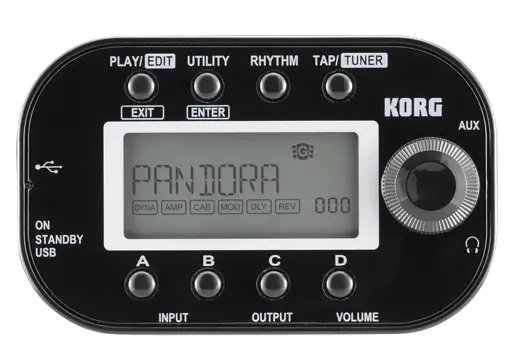
Korg has shrunk its Pandora multi-effects processor into… the Pandora mini.

Now you can play your instrument through this processor and get just the effect you need. Granted, it’s designed primarily for guitar and bass players, but why shouldn’t us keyboard and synth players get a look in too? I am sure we could get some nifty sounds out of this thing.

korg pandora mini

Feature highlights:

  • Ultra-compact pocket-size multi-effect designed for both guitar and bass
  • Powered by “REMS” modelling technology
  • 200 preset programs (including song presets)
  • 200 user programs locations for storing your own sounds
  • 158 types of amazing amps and effects
  • Use up to seven effects at once
  • 100 different rhythm patterns plus a built-in metronome; ideal for composing and practice.
  • AUX input for jamming along to your favorite songs on CD, MP3, etc; Ability to change the pitch of the Aux input by ± one octave
  • TAP button makes it easy to set the delay time or the tempo of the Rhythm
  • Four program memory buttons allow one-touch recall of your favorite programs
  • Auto-tuner with muting
  • Backlit LCD screen ensures good visibility, even in dim locations
  • Stylish body, available in either black or white
  • Sound editing software; edit sounds and manage programs from your computer (available for download from the Korg website)
  • Two-way power: batteries or USB bus power

Pandora mini specifications

Effects:
158 types (Maximum number of effects available simultaneously: 7)

Programs:
User: 200; Preset: 200

Inputs:
Guitar/Bass INPUT (1/4″mono jack), AUX (mini stereo jack)

Outputs:
Line OUTPUT (1/4″mono jack), PHONES (mini stereo jack)

Tuner section:
Detection range 27.5 Hz-2,093 Hz (A0-C7), Calibration A = 438 Hz-445 Hz

Rhythms:
Number of patterns = 100,
Tempo = 40-240 BPM

Power supply:
One AA alkaline dry cell or NiMH rechargeable battery, USB bus power supply (or USB?type AC adapter)

Battery life:
Alkaline battery/NiMH rechargeable battery (1900mAh)
Allows approx. 5 (Al) or 6 (NiMH) hours of continuous use (backlight OFF)
Allows approx. 3 (Al) or 4 (NiMH) hours of continuous use (backlight ON)

Dimensions (W x D x H):
88 x 56 x 30mm/3.15 x 2.2 x 1.18 inches (not including protrusions)

Weight:
80g/2.82 oz. (not including battery)

Included items:
Alkaline Batteries (for checking recorder operation), Rubber feet

Korg Pa3X professional arranger workstation unveiled [NAMM11]

January 15, 2011

Buy the Korg Pa3X Arranger Workstation at zZounds

Korg expands its Pa series of arranger workstations with the flagship Pa3X. There’s a huge range of highlights so here’s the lowdown direct from Korg:

  • Enhanced RX (Real eXperience) sound engine offers improved realism and new vivid sound, including pianos borrowed from the acclaimed Korg SV-1 Stage Vintage Piano, plus Ambience Drums
  • Massive internal ROM – plus up to 256 MB of user PCM data (equivalent to 512 MB) – provides an extraordinarily powerful wave memory, delivering the best sound quality possible
  • Three assignable switches, a four-way joystick, and our unique ribbon strip ensure total control for the many available levels of sound articulation (DNC)
  • Choose either 61 keys or 76 semi–weighted keys; both with velocity and aftertouch
  • Elegantly designed and reliable aluminium cabinet
  • TouchView™ TFT display; 76-key model features a motorised tilting display
  • Professional graphic interface with new Search facility for quickly locating musical resources
  • High-fidelity, optional amplification/speaker bar with Korg’s own Easy Connect system (no support, cables, or additional power supply needed)
  • Self-refreshing PCM Data memory backup – supported by our own Intelligent Re-Charge system – ensures fast startup
  • Improved Style and Performance selection, Over 400 factory Styles; each with 4 variations and 4 Fill In + Break, plus 15 user banks for unlimited storage of your favourite customised or user created Styles and settings
  • Enhanced Guitar Mode 2 for even more realistic guitar parts
  • Chord Sequencer function records any chord progression on-the-fly
  • Up to 8 Stereo Effects at once, including flexible Master and Insert routing for Styles and songs. New Vintage Effects from the acclaimed SV-1 Stage Vintage Piano
  • New TC-Helicon Vocal Processor (VoiceLive2 derived) with dedicated professional effects
  • Adaptive Mic Setting provides a virtual sound engineer to automatically set the best EQ/Compressor/Gate settings for your voice
  • Professional Final Mastering tools from “Waves Audio” plugins “MaxxAudio” suite.
  • New Double MP3/MIDI files player and recorder with Advanced Vocal Remover.
  • Enhanced compatibility with Lyrics in graphical format (+G) for MIDI files and MP3 files.
  • New Audio Chord Detection function that automatically extracts chords to send to the Vocal Processor from MP3 files.
  • Enhanced sound compatibility for GM songs.
  • Multi-language extended character set. Lyrics can be showed in their original languages.

korg pa3x professional arranger workstation

KORG Pa3X Professional Arranger Workstation Specifications

Keyboard:
61-key with velocity and aftertouch
76 semi-weighted keys with velocity and aftertouch

System
OPOS (Objective Portable Operating System)
RX (Real eXperience)
DNC (Defined Nuance Control)
Natural Ambience Drums Sound Technology
Multitasking, Load while play feature
Upgradable Operating System
Self-Refresh Battery for PCM data

Tone Generator
KORG EDS (Enhanced Definition Synthesis) sound generator:
120 Voices, 120 Oscillators
Filters with Resonance
Three band EQ for each track

Effects
Up to 8 Stereo Digital Multi-Effects block system
140 Effects types plus VOCODER
Final Mastering Effects by WAVES  
(MaxxEQ™, MaxxBass™, MaxxTreble™, MaxxStereo™, MaxxVolume™)

New Voice Processor Technology by TC-Helicon® with 7 Effects:
Four-part Harmonizer, Double, µMod, Reverb, Delay, Filter, HardTune, Pitch Correction plus Compressor, EQ, Gate (Adaptive Mic Setting on the Mic input)

Sounds / Drumkits More than 1100, including Stereo Piano and GM Level 1 & 2 compatible sounds; more than 90 Drum Kits

User area: 512 Sounds, 128 Drum Kits
Defined Nuance Control (DNC) Technology

Real Drum Ambience

Digital Drawbars: 9 Footages

Realtime controls: Assignable Sliders
Full editing of Sounds and Drum Kits

Sampling: Record, Edit, Time Slice, Compression Tool, Load/Import of Korg, Wav, AIFF and Akai files; Export of Wav and AIFF files

PCM RAM Memory: 128 MB standard (equivalent to 256 MB linear data), expandable up to 256 MB (equivalent to 512MB linear data) with the optional EXB-M256 memory expansion board

Styles
More than 400 preloaded Styles, freely reconfigurable
1200 available Style locations including the Favorite banks
Eight Style tracks, 4 Single Touch Settings, 4 Pads and one Style Performance per Style
Guitar Track 2 mode, Parallel and Fixed NTT
Compatible with old “i-Series” and Pa series Style format
Style Record with Step Record, Track and Event Edit functions
Style controls: 3 Intros, 4 Variations, 4 Fills, Break, 3 Endings, Synchro Start/Stop, Tap Tempo/Reset, Fade In/Out, Bass Inversion, Auto Fill, Manual Bass, Tempo Lock, Memory, Accompaniment/Real Time Track Balance Volume, Accompaniment Mute, Drum Mapping, Snare & Kick Designation, Single Touch

Chord Sequencer
Realtime Style Chord Sequencer Recorder

Performance / STS
512 Realtime Performance locations

STS: Memorize Realtime tracks and Voice Processor settings, up to 4 x 1200 Styles, up to 4 x SongBook entries

Realtime tracks
Four Keyboard tracks (Upper 1, 2, 3, Lower) with dedicated on/off and sound select buttons

Song Play
Patented XDS Crossfade Dual Sequencer Player (Supported formats: MID, MID+G, KAR, MP3 + lyrics, MP3+G)
2 Players with separate Select, Start/Stop, Home, Rewind and Fast Forward controls
X-Fader Balance control
Lyrics, Score, and Chord data can be displayed on screen,
or on external video monitor (with VIF4 option installed)
Markers
Jukebox function

Mp3 Player / Recorder
Double Mp3 Player and Mp3 Recorder
Two Mp3 files can be played simultaneously in Song Play Mode
Real Time Transpose (+6/-5 semitones) 
Tempo change (±30%)
Advanced Vocal Remover Record MP3 files including Styles, SMF, Real Time Tracks, Pads, Microphone and Effects
Audio Chord detection for Vocal Harmony

Sequencer
Quick Record (Backing Sequence)
 Multitrack and Step Record functions – Full-featured sequencer
16 tracks; Up to 200,000 events
SMF native format

SongBook
Fully programmable music database, based on Styles, SMF, Karaoke, MP3 with automatic selection of Style Play and Song Play modes
User-definable custom lists
Filtering and Ordering options

Compatibility

“i-Series” models:Styles

Pa series: Style, Performance, Program/Sound, Song, SongBook, Pad

Multi Pad
4 Assignable Pads + Stop Button – Pad Record function

Help System
Hypertextual, Contextual, Multilingual

General Controls
Master Volume, Real Time-Acc/Seq Balance Volume, Ensemble, Octave Transpose, Master Transpose, Style Change, Quarter Tone and Arabic Scale memorized inside Performance/STS – Realtime controllers: Joystick (pitch + modulation), Ribbon Control, 8 Assignable Sliders, MP3 Volume, Mic Volume, Mic Harmony/Double Vol., Mic Reverb/Delay Vol., 3 Assignable Switches, Tempo +/-, Dial, Up/+, Down/- – Search Function

Control Inputs
Damper Pedal (support half-pedaling with optional DS-1H pedal), Assignable Pedal/Switch, EC-5 (Programmable Multi-Switches)

Analog Outputs
Unbalanced/Balanced Jack Left/Mono, Right/Mono, Out 1, Out 2,
Headphones (in the front panel)

Digital Outputs
S/P DIF (48 kHz – coaxial), mirroring the Main Stereo Outputs

Line Inputs
2 Unbalanced/Balanced Jack Left/Mono, Right/Mono

Microphone Input
Combo XLR balanced with Gain control (15 to 50 dB) and switchable Phantom Power

MIDI
In, Out, Thru; standard Midi connectors 
USB to Midi using the USB Device port
Individual track assignment
8 user definable MIDI Setups

USB
2 USB Host Front/Rear (2.0 Hi Speed) and 1 USB Device Rear (1.1 Full Speed) connections

Hard Disk / Mass Storage
Standard 4 GB memory USB
Optional 2.5″ SATA Hard Disk Driver (61-key)
Standard internal 2.5″ SATA Hard Disk Drive (76-key)

DVD-CD Player / Floppy Disk
Optional using standard USB DVD/CD/FD Drives connected via USB Host ports

Display
Pa3X 61: Resolution: 320 x 240 pixels – TFT Color TouchView Graphic Touch Screen;
Pa3X 76: Motorized Tilt Display – Resolution: 320 x 240 pixels – TFT Color TouchView Graphic Touch Screen

Clock
Internal System Clock

Consumption
30 Watt – 50 Watt when connected with Amplification Bar (PaAS)

Dimensions (W x D x H)
980 x 366 x 145 mm / 38.58 x 14.41 x 5.71 inch without music stand (61);
1192 x 366 x 145 mm / 49.93 x 14.41 x 5.71 inch without music stand and with the display fully lowered (76)

Weight
14.7 kg / 32.4 lbs (61);         17.5 kg / 38.58lbs (76)

Accessories
Manual, AC Power Cable, Music Stand, CD-ROM

Options
PaAS Amplification System
EXB-M256 – 256 MB RAM Expansion Board
VIF4 – Video Interface Board
EXP-2 – Expression/Volume Pedal
XVP-10 – Professional Expression/Volume Pedal
EC5 – Assignable Multi-Switch Controller
DS-1H – Damper Pedal
PS-1 – Switch Pedal
Hard Disk Kit Installation Kit (61 only)
* Helicon is a  registered trademark of TC-Helicon Vocal Technologies Ltd.
* MaxxAudio, MaxxEQ, MaxxBass, MaxxTreble, MaxxStereo, MaxxVolume are trademarks of Waves Audio Ltd.
* Specifications and appearance are subject to change without notice for improvement.

Pa AS – Pa Amplification System for Pa3X (76 and 61 keys)

System
3 Channel Amplification System

Power
2×20 Watt (Middle/High Frequency) + 1×40 Watt (Sub Woofer)

Speakers
5 Speakers: 2 Middle range (80 mm) + 2 Tweeters + Dual Coil Subwoofer (130 mm).

Cabinet
Aluminum case with Bass Reflex System

Connectivity
Extremely Simple Connection. Power and the audio signal from the Pa3X are via a special connector that is automatically attached to the keyboard. No Cable, No Power supply needs to be attached to the Pa3X

Dimensions (W x D x H)
992 x 173 x 137 mm / 39.06 x 6.81x 5.39 inch

Weight
5.7 kg / 12.57 lbs

Buy the Korg Pa3X Arranger Workstation at zZounds

Next Page »